In April 2025, I wrote about staying cool when headlines get loud — and why a simple trio (VOO, QQQ, and SCHD) still deserved a seat in a long-term portfolio.
That mindset hasn’t changed.
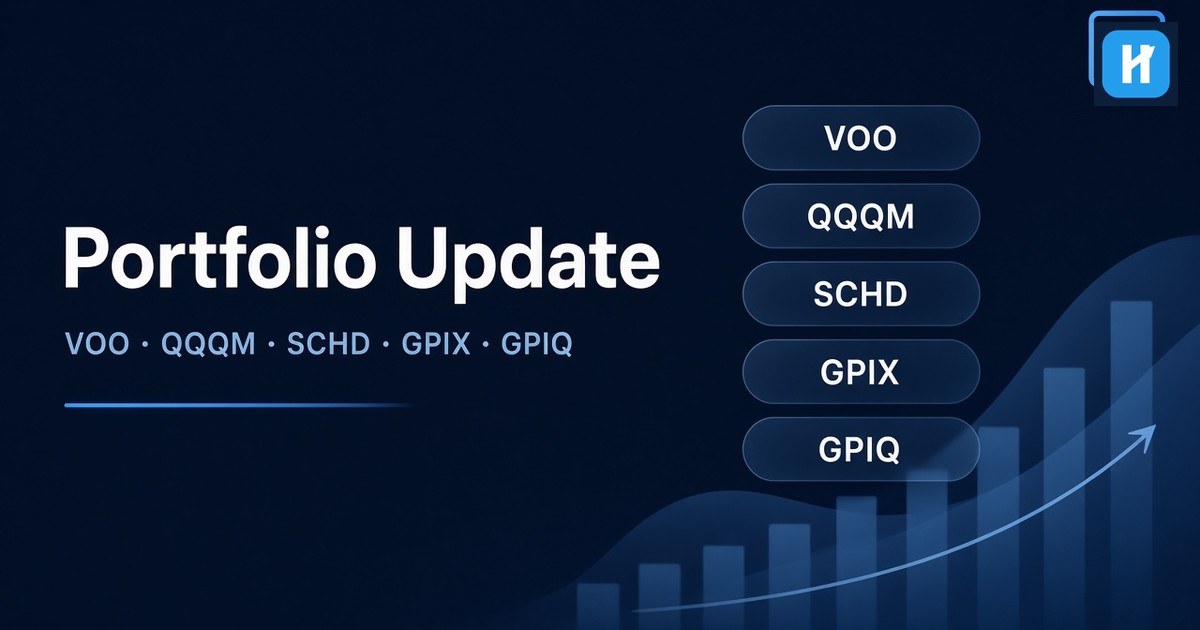
What has changed is the toolkit I’d use for the same calm plan in September 2026:
- Keep VOO as the S&P 500 core
- Swap the Nasdaq-100 sleeve from QQQ → QQQM (same index idea, lower expense ratio)
- Keep SCHD as the quality dividend anchor
- Optionally add an
- QQQ’s own fee/structure story moved
QQQ’s expense ratio is now 0.18% (it was 0.20% before a UIT → open-end reclassification after the close on December 19, 2025). QQQM sits at 0.15%. The gap is small — 0.03% — but small leaks still count.
- Income tools got more mainstream
Covered-call / premium-income ETFs are easier to find and talk about. GPIX and GPIQ are the optional sleeve I’m watching when the goal is cash flow, not maximum upside.
- The foundation sequence still comes first
Before optimizing tickers: build an emergency fund, knock down high-interest debt, then invest consistently.
This is an update, not a panic rewrite. Same calm. Slightly sharper defaults.
What changed since April 2025
A few practical updates matter more than any hot take:
- QQQ → QQQM for new buy-and-hold / DCA money
Both track the Nasdaq-100. For a boring weekly habit, I’d rather pay the lower ongoing fee.
- QQQ’s own fee/structure story moved
QQQ’s expense ratio is now 0.18% (it was 0.20% before a UIT → open-end reclassification after the close on December 19, 2025). QQQM sits at 0.15%. The gap is small — 0.03% — but small leaks still count.
Income tools got more mainstream
Covered-call and premium-income ETFs are easier to find and talk about. GPIX and GPIQ are optional sleeves when the goal is cash flow, not maximum upside.
The foundation sequence still comes first
Before optimizing tickers: build an emergency fund, knock down high-interest debt, then invest consistently.
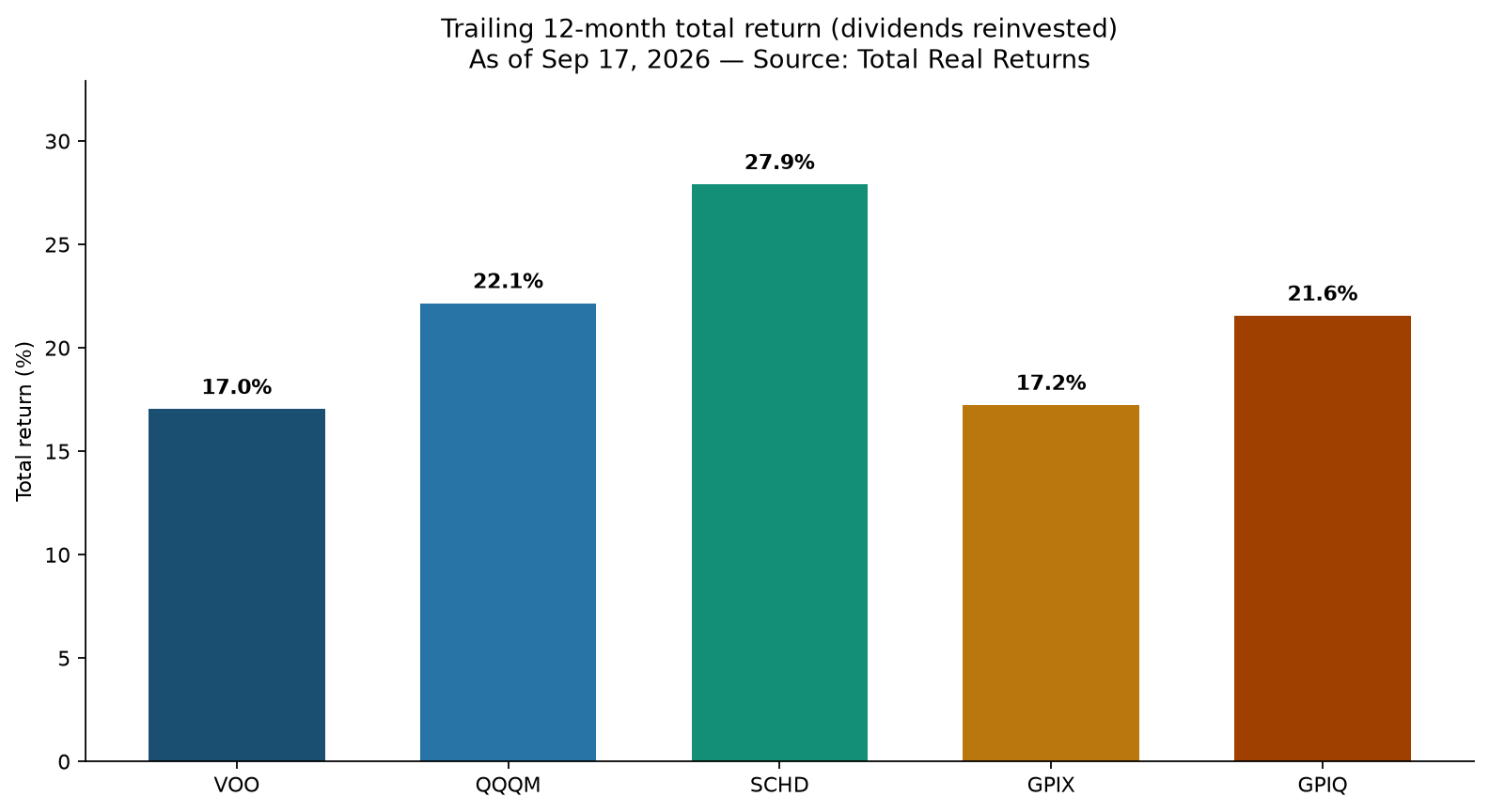
Snapshot: trailing ~12-month total returns
As of September 17, 2026 (Total Real Returns, dividends reinvested):
Ticker 1-yr total return VOO +17.03% QQQM +22.15% QQQ +22.10% SCHD +27.90% GPIX +17.23% GPIQ +21.55% Source: Total Real Returns. Past performance is not a promise of future results.
The calm core
VOO — S&P 500 core
VOO remains the “own a big slice of America” foundation.
- Broad exposure to large U.S. companies
- Expense ratio: 0.03%
- Built for long-haul consistency, not vibes
VOO is the boring core doing its job.
QQQM — Nasdaq-100 growth sleeve
For new buy-and-hold contributions, I’m pointing the growth sleeve at QQQM instead of QQQ.
QQQ QQQM Index idea Nasdaq-100 Nasdaq-100 Expense ratio 0.18% 0.15% 1-yr return +22.10% +22.15% SCHD — quality dividend ballast
SCHD still plays the “get paid while you wait” role: higher-quality dividend-oriented U.S. companies, with a calmer income profile than pure growth.
- Role: ballast + dividends alongside growth sleeves
- Expense ratio: 0.06%
- Recent 1-yr total return: +27.90% (dividends reinvested)
- For investors who want income and long-term ownership, not yield-chasing junk
The trio remains VOO = broad core, QQQM = growth tilt, and SCHD = dividend quality.
Fee comparison
Ticker Expense ratio VOO 0.03% SCHD 0.06% QQQM 0.15% QQQ 0.18% GPIX 0.29% GPIQ 0.29% 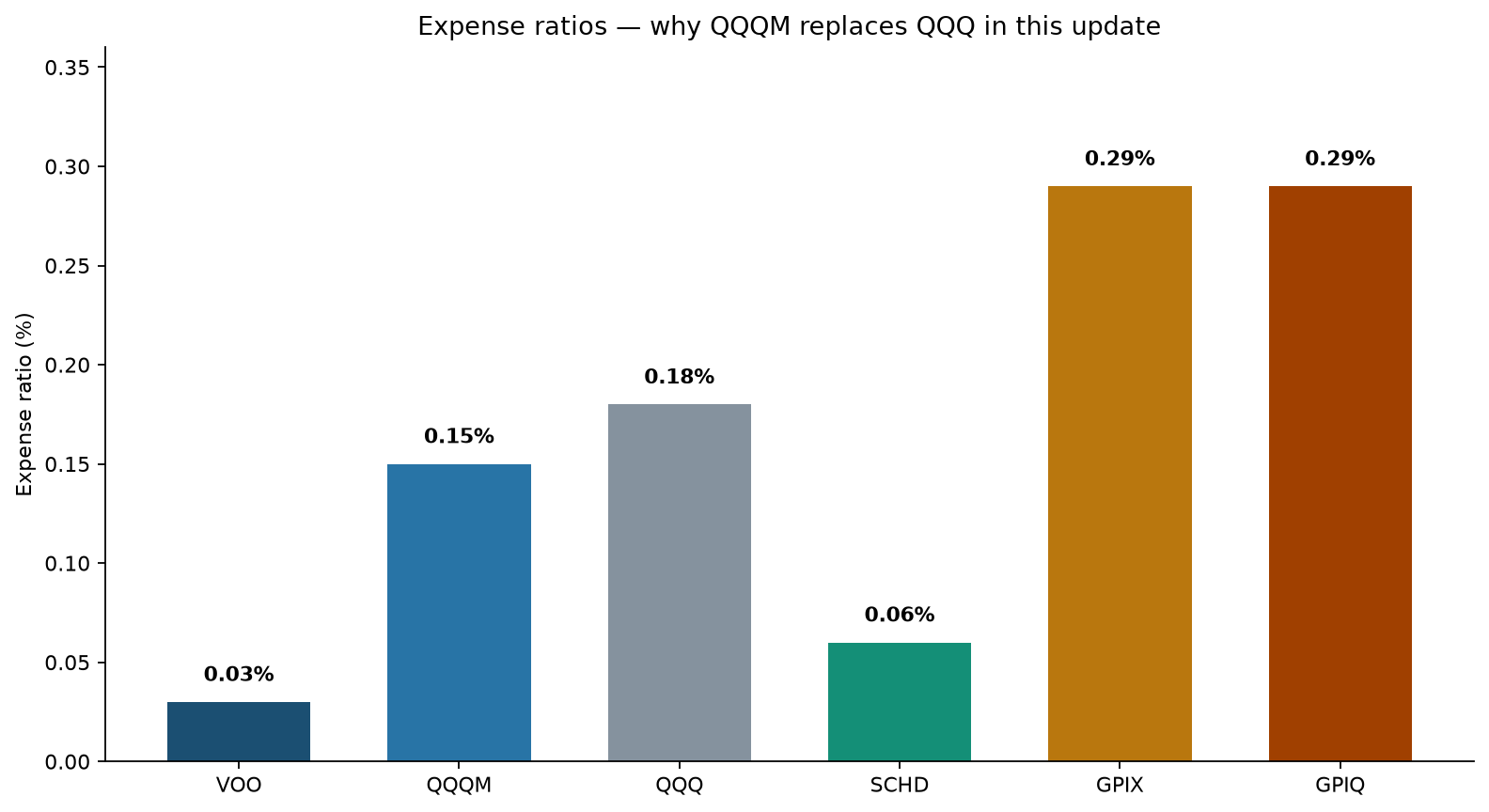
Lower fees don’t guarantee higher returns, but they mean less leakage over decades.
Optional income sleeve: GPIX + GPIQ
If the goal shifts from maximum long-term growth toward more cash flow, covered-call style funds can play a role — as a sleeve, not a full replacement for the core.
What these are
- GPIX — Goldman Sachs S&P 500 Core Premium Income ETF; expense ratio 0.29%.
- GPIQ — Goldman Sachs Nasdaq-100 Core Premium Income ETF; expense ratio 0.29%.
GPIX/GPIQ’s distribution rates come largely from selling call options, not fat stock dividends alone. Distributions can include return of capital, are not guaranteed, and do not mean extra free return. Prefer total return when comparing GPIX to VOO or GPIQ to QQQM.
The tradeoff
- You may collect more cash distributions
- You may give up some upside when markets rip higher
- Distribution levels and NAV behavior can change
- You pay higher fees than VOO or QQQM
Optional income tools are for people who understand they’re trading some growth potential for cash flow.
Practical framing
Goal Lean toward Long-term growth VOO + QQQM (+ SCHD) More equity income Small GPIX / GPIQ sleeve Both Core first, income sleeve second
How I’d think about a 2026 keep-calm portfolio
Not advice — just the mental model:
- Core first: VOO or a total-market equivalent
- Growth sleeve: QQQM for Nasdaq-100 DCA
- Dividend ballast: SCHD
- Optional income sleeve: GPIX + GPIQ only if you want cash flow and accept capped-upside dynamics
- Habit over headlines: automatic contributions beat perfect timing
If markets get loud again, keep the plan, keep the contributions, and keep emotions out of the trading app.
Before you optimize tickers
- Build 3–6 months of emergency savings
- Knock out high-interest debt
- Invest consistently — weekly or biweekly beats waiting for the perfect entry
Then fine-tune VOO / QQQM / SCHD / optional GPIX + GPIQ.
Final thoughts: calm is still the edge
April 2025 was right about the mindset. September 2026 is clearer on the wrappers: same long-term ownership idea, QQQM as the lower-fee Nasdaq-100 contribution default, and GPIX + GPIQ as optional income tools with real tradeoffs.
Keep calm. Stay cool. Buy quality on purpose — and let time do the heavy lifting.
Want the fee-math deep dive? Read: Why I’m Switching From QQQ to QQQM for My Weekly $50. Explore more investing guides on Help Your Finances.
This article is for educational and informational purposes only. It is not financial, investment, tax, or legal advice. Fund structures, expense ratios, yields, and performance change over time. Verify current data with issuers, prospectuses, and your broker before acting. Past performance does not guarantee future results.