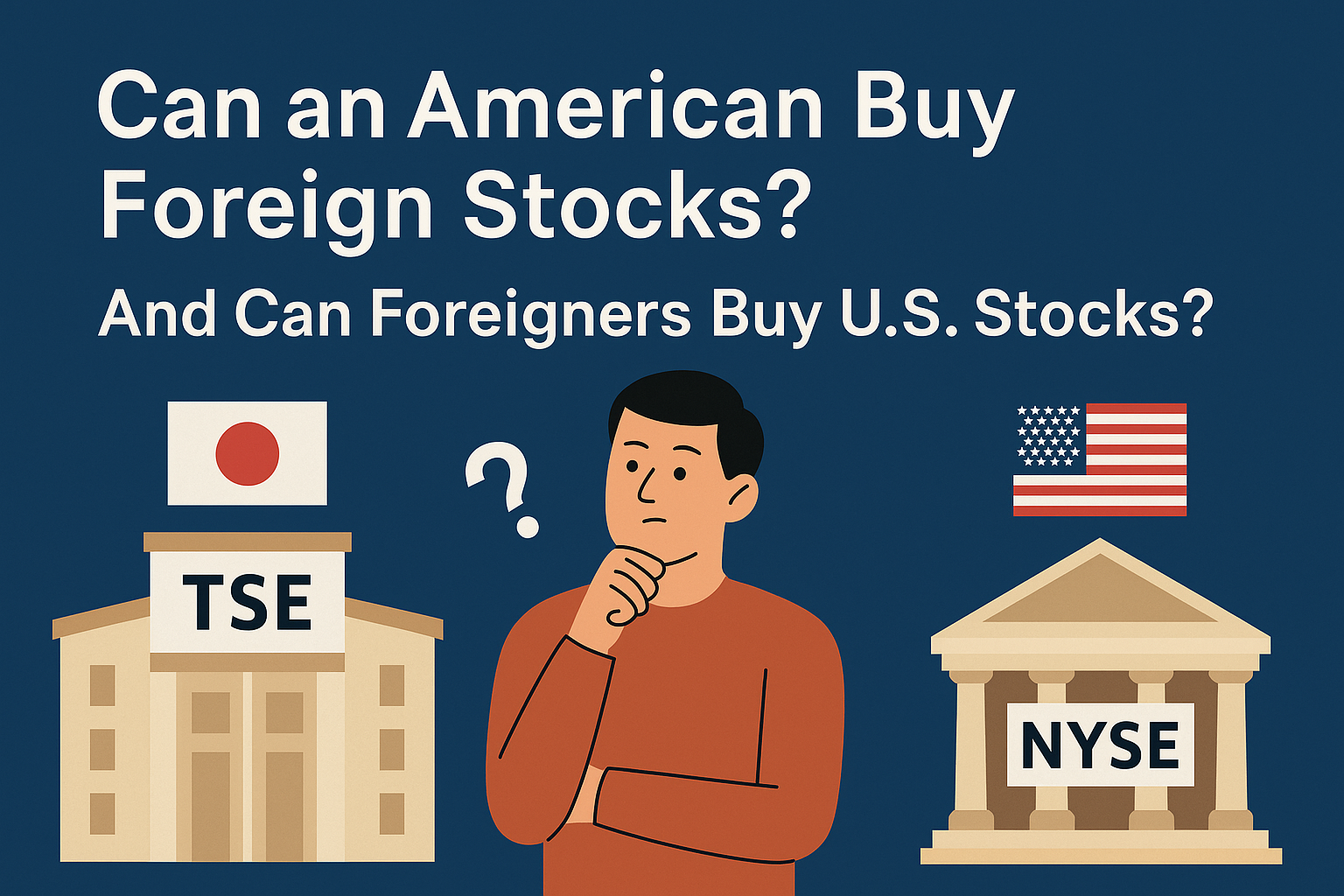
📈 Can an American Buy Foreign Stocks? And Can Foreigners Buy U.S. Stocks? A Story of Global Investing (Starring One Curious Investor)
Imagine this.
You’re sipping coffee in Southern California, scrolling through headlines, when a piece about Toyota catches your eye. Not the latest Camry redesign — no, this is about Toyota’s rise in electric vehicle dominance, its hybrid leadership, and its quietly soaring profits in Japan. You think, “Man, I’d love to invest in Toyota.”
But then it hits you: Toyota’s a Japanese company. Can I even buy Japanese stocks from here in the U.S.?
Welcome to the world of cross-border investing — where markets are global, but your brokerage account might not be. Let’s follow the story of Alex, an everyday American investor, as they explore how to invest in Toyota stock… and what it means for investors all over the world.
🌎 Chapter 1: The Global Investment Dream
Alex has a typical U.S. brokerage account. They already own Apple, some VTI, and a few dividend favorites like Realty Income and SCHD. But after reading about Toyota, they wonder — How can I invest in companies outside the U.S., especially on foreign exchanges like Tokyo or London?
That’s where the story begins.
💵 Chapter 2: ADRs – The “Easy Button” for Foreign Stocks
Alex’s first discovery? Something called an ADR — American Depositary Receipt.
It turns out, Toyota already trades on the NYSE under the symbol TM. That’s right — no need to mess with foreign currencies or Tokyo market hours.
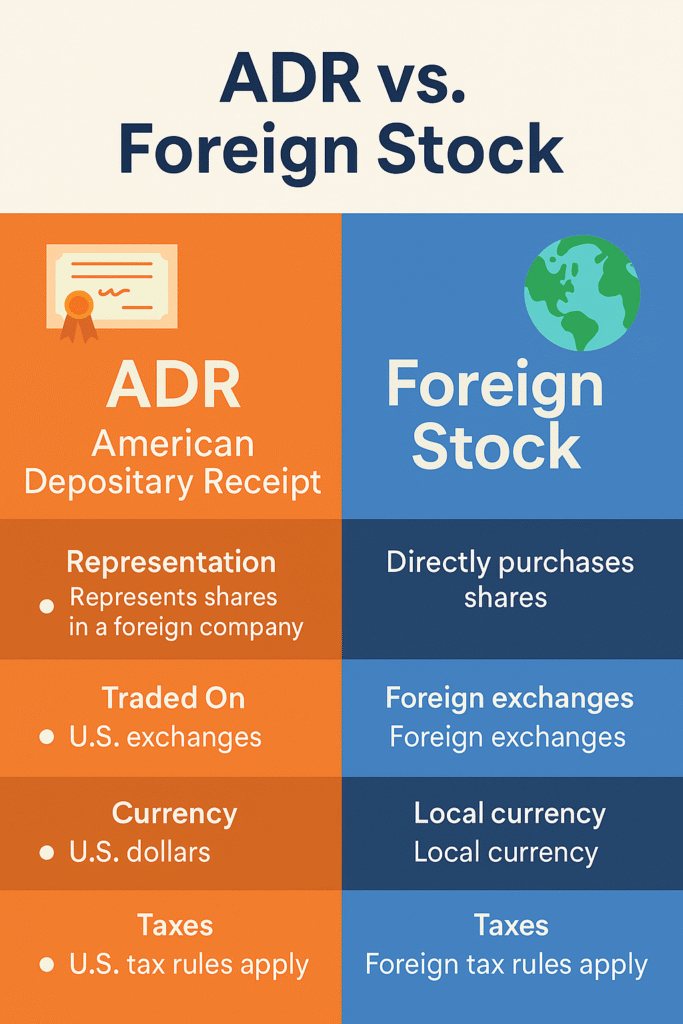
ADRs are essentially proxy stocks. A U.S. bank holds the real foreign shares and issues receipts (ADRs) that you can buy just like any regular stock in your account. It’s the same Toyota — same financials, same company — but wrapped in a way that’s tradable in the U.S.
Boom. One click, and Alex owns a piece of Toyota.
But then curiosity strikes again.
“What if I want to buy Toyota directly on the Tokyo Stock Exchange (TSE)? Would the stock price be different? Would it be better or worse?”
⏳ Chapter 3: Are Stock Prices Different on Foreign Exchanges?
Alex starts comparing prices.
- On the NYSE, TM is trading at $180.
- On the Tokyo Stock Exchange, Toyota is trading at ¥2,900.
Wait — that’s not even close!
But here’s the twist: foreign listings and ADRs have different share structures and currency translations. One ADR might represent two or ten shares of the foreign stock. Add in USD/JPY exchange rates, and things get wonky.
Still, in theory, they should match once adjusted.
So does the market always get it right?
Not exactly. Prices can vary slightly across markets due to time zone gaps, currency swings, or investor sentiment. But large gaps are rare and usually get closed quickly by professional traders called arbitrageurs.
In 2021, for example, when U.S. regulators threatened to delist some Chinese stocks, the NYSE-listed ADRs of Alibaba traded at a noticeable discount to the same shares in Hong Kong. But that imbalance didn’t last long.
💡 Important Fact #1:
When a company is listed on multiple exchanges, it does not mean more shares exist. The total outstanding shares remain fixed — they’re simply made available across different markets. Whether you buy shares in Japan, the U.S., or London, it all ties back to the same finite pool of equity issued by the company.
🌐 Chapter 4: Can Americans Buy Foreign Stocks Directly?
Alex now wants to go deeper: “Forget the ADR — what if I want to buy directly on the Tokyo Stock Exchange?”
The answer: Yes, but it’s trickier.
Many U.S. brokerages like Fidelity, Charles Schwab, and Interactive Brokers offer access to international markets. But:
- You may need to apply for international trading access
- You’ll deal with currency conversion (e.g., USD to JPY)
- Fees can be higher
- You might need to understand foreign tax rules (some countries withhold taxes on dividends)
Still, with a broker like Interactive Brokers, Alex could own Toyota directly on the Tokyo exchange, in yen, just like a local Japanese investor.
🧳 Chapter 5: Flip the Script – Can Foreigners Buy U.S. Stocks?
Alex now wonders, “If I can invest abroad, can investors abroad buy stocks here?”
Absolutely. In fact, U.S. stock markets are the most accessible in the world.
Every day, investors from Europe, Asia, Africa, and South America buy and sell shares of Amazon, Google, and yes — Toyota’s ADRs — through U.S. brokers.
To do it, a foreign investor needs:
- A brokerage account with a firm that supports international clients (like Interactive Brokers, Schwab International, or TD Ameritrade International)
- A passport and proof of address
- Completion of the IRS Form W-8BEN (so they’re taxed correctly)
While capital gains usually aren’t taxed by the U.S., dividends are — typically at 30%, unless their country has a tax treaty with the U.S.
📈 Chapter 6: Is Stock Performance Tied to Geography?
Let’s say Toyota had a record-breaking sales year in Europe but slumped in Japan. Would the shares in the Tokyo exchange fall while the NYSE ADRs rise?
That’s not how it works.
💡 Important Fact #2:
Stock price performance reflects the overall performance of the entire company, not its individual regional units. A surge in European profits would benefit all shareholders — whether they bought shares in New York or Tokyo.
So Alex learns: Whether you’re holding Toyota in yen or dollars, you own a piece of the same global operation — the same earnings, balance sheet, and future growth story.
🧠 Chapter 7: The Big Picture
By now, Alex sees the whole map:
- You can own foreign stocks via ADRs, or directly via international trading accounts
- Stock prices should align, but can differ slightly
- The number of shares remains constant, no matter how many exchanges a stock is listed on
- Stock performance is driven by overall company results, not regional fluctuations
- Non-U.S. investors can and do invest in U.S. markets all the time
Alex now proudly holds Toyota in two forms: some NYSE ADRs in their U.S. account, and a small position directly on the TSE via Interactive Brokers.
🧾 TL;DR (Too Long, Drove a Prius)
| Question | Answer |
|---|---|
| Can a U.S. citizen buy foreign stocks? | ✅ Yes — through ADRs or international brokers |
| Are stock prices the same across countries? | 🔁 Usually close, but small gaps happen |
| Can foreigners invest in U.S. stocks? | ✅ Yes — via international brokerage accounts |
| Is it hard to do? | 😅 A bit more paperwork, but very doable |
| Are there more shares when listed in multiple exchanges? | ❌ No — total shares remain fixed |
| Does regional performance affect share prices? | ❌ Not directly — stock price reflects overall company results |
✍️ Final Thoughts: Toyota, Tesla, or Tokyo — The World Is Yours
The investing world is no longer divided by oceans and borders. Whether you’re buying Toyota in Tokyo or Tesla in Texas, capital is global — and so are the opportunities.
Just be smart:
- Understand your broker’s access
- Watch for currency risk
- Learn the tax rules
- And most importantly: stay curious, like Alex.
Because in today’s world, investing across borders isn’t just possible — it might be your next competitive edge.
Related Articles:
- Mutual Funds Aren’t Dead. Why Some Investors Still Love Them
- Trillions in U.S. Investment—What It Means for Americans
Financial and Legal Disclaimer
The content provided on HelpYourFinances.com is intended for general informational purposes only and does not constitute financial, legal, or professional advice. While we make every effort to ensure the accuracy and reliability of the information presented, it is important to understand that financial and legal matters are complex and highly individual.
HelpYourFinances.com is not a licensed financial planner, investment advisor, legal professional, or law firm. The materials on this website should not be considered a substitute for personalized advice from qualified financial advisors, attorneys, or other licensed professionals who can assess your unique situation.
Before making any financial, legal, or other important decisions, we strongly encourage you to seek advice from qualified experts. Any reliance you place on the information provided here is strictly at your own risk. HelpYourFinances.com, its owners, and contributors disclaim any liability for actions taken based on the content of this website.