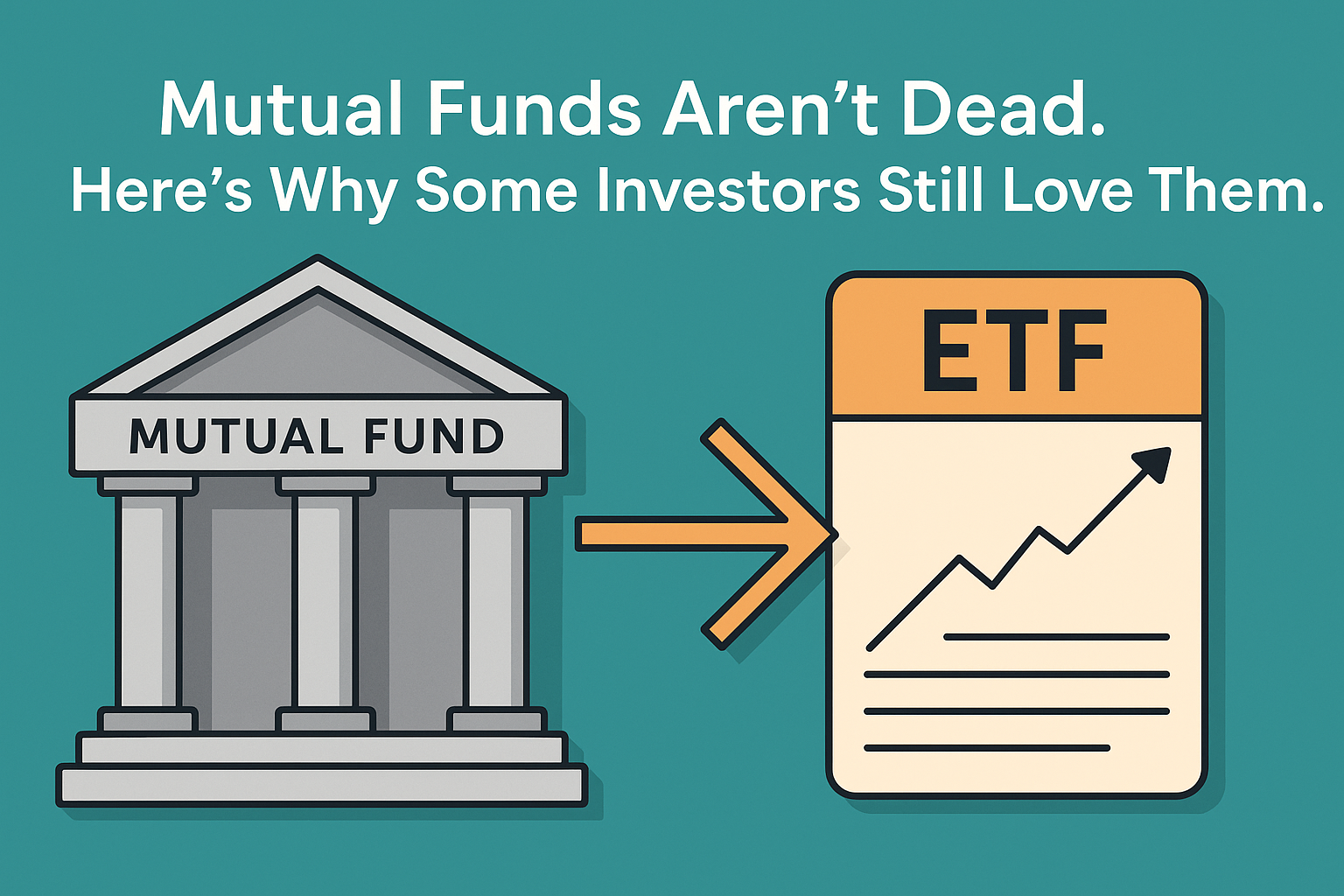
If you’ve dipped your toes into the investing world lately, you’ve probably noticed that ETFs (Exchange-Traded Funds) are getting all the love. They trade like stocks, have low fees, and offer tax efficiency. So it’s fair to ask:
Why on earth would anyone still trade mutual funds?
Believe it or not, there are still solid reasons why mutual funds continue to have a loyal following, especially among long-term and retirement-focused investors. Let’s break it down.
📆 1. Automatic Investing & Retirement Accounts
Mutual funds are still the default investment vehicle in most retirement accounts like 401(k)s and 403(b)s. That’s because they make it super easy to:
- Set up automatic contributions
- Invest specific dollar amounts (instead of needing to buy whole shares)
- Stay consistent with dollar-cost averaging
These features make mutual funds perfect for hands-off savers building wealth over decades.
💸 2. Dollar-Based Investing
With mutual funds, you can invest any dollar amount — even if it’s a weird number like $247.32. ETFs typically require you to buy whole shares, unless your brokerage allows fractional ETF investing.
This makes mutual funds more accessible for regular investors who want to automate monthly contributions without worrying about share prices.
⚖️ 3. Less Trading Stress
Mutual funds don’t trade throughout the day. You buy or sell at the end-of-day NAV (Net Asset Value). Everyone gets the same price.
This removes the temptation to time the market, panic during a dip, or chase short-term momentum. For many, this is actually a built-in emotional buffer that helps them stay invested long term.
🚀 4. Target-Date Funds: Set It and Forget It
Most mutual fund investors today are in target-date funds. These are all-in-one portfolios that adjust automatically as you get closer to retirement.
Yes, ETFs offer some target-date versions, but mutual fund target-date options are more common and easier to integrate into employer plans. They provide automatic rebalancing, professional management, and simplicity.
If you’re weighing them against plain index funds, see my comparison of target date funds vs index funds.
👨🎓 5. Active Management (When It Makes Sense)
While ETFs are mostly passive, mutual funds can be actively managed by professionals. This can be valuable in certain asset classes like bonds, international markets, or niche sectors where expert decision-making may outperform indexes.
Some investors prefer to pay for this extra layer of research and strategic allocation, especially in more complex areas of the market.
🛋️ So Who Should Use Mutual Funds?
| Investor Type | Why Mutual Funds Make Sense |
|---|---|
| Beginner Savers | Easy automation and simplicity |
| 401(k)/403(b) Participants | Most plans use mutual funds by default |
| Long-Term Investors | Great for hands-off, disciplined growth |
| Risk-Averse or Emotional Traders | Reduces day-trading temptation |
| Those Without Brokerages | Can often invest directly through fund providers |
🎯 Final Thoughts
ETFs are like a sleek Tesla — efficient, flexible, and built for speed. Mutual funds are like a trusty Toyota Camry — reliable, steady, and built to go the distance.
There’s no one-size-fits-all solution. It all comes down to your goals, your investing style, and how much control you want over the process. ETFs are the rising stars, but mutual funds still have a rock-solid place in the financial universe.
Whether you go mutual, ETF, or a mix of both — the most important thing is just to start investing and stay consistent.
Want help building a diversified portfolio that fits your lifestyle? Let’s chat.
Related Articles:
- A Simple Way to Grow Your Wealth with Index Funds
- Which is Best for Your 401(k)? Index vs. Target-Date Funds
Financial Disclaimer
The information provided on HelpyYourFinances.com is for general informational purposes only and is not intended to be financial advice. While we strive to ensure the accuracy and reliability of the content, it is important to remember that financial decisions are personal and should be tailored to your individual circumstances.
We strongly recommend that you consult with a qualified financial advisor or other professional before making any financial decisions. The content on this website should not be considered a substitute for professional financial advice, analysis, or recommendations. Any reliance you place on the information provided is strictly at your own risk.