Everybody borrows.
In fact, in American culture, borrowing is so normal it barely raises an eyebrow. Cars are financed. Homes come with 30-year promises. Credit cards quietly follow us everywhere like loyal (but dangerous) pets.
It often sounds like this is the deal:
You borrow until you die.
And here’s the twist — both the poor and the wealthy borrow.
Same word. Same contracts. Completely different outcomes.
Everybody Borrows — That’s Not the Problem
Borrowing itself isn’t bad. If it were, the entire economy would collapse before lunchtime.
The problem isn’t borrowing.
The problem is how and why people borrow.
That’s where the gap between poor and wealthy quietly forms.
Why the Poor Borrow
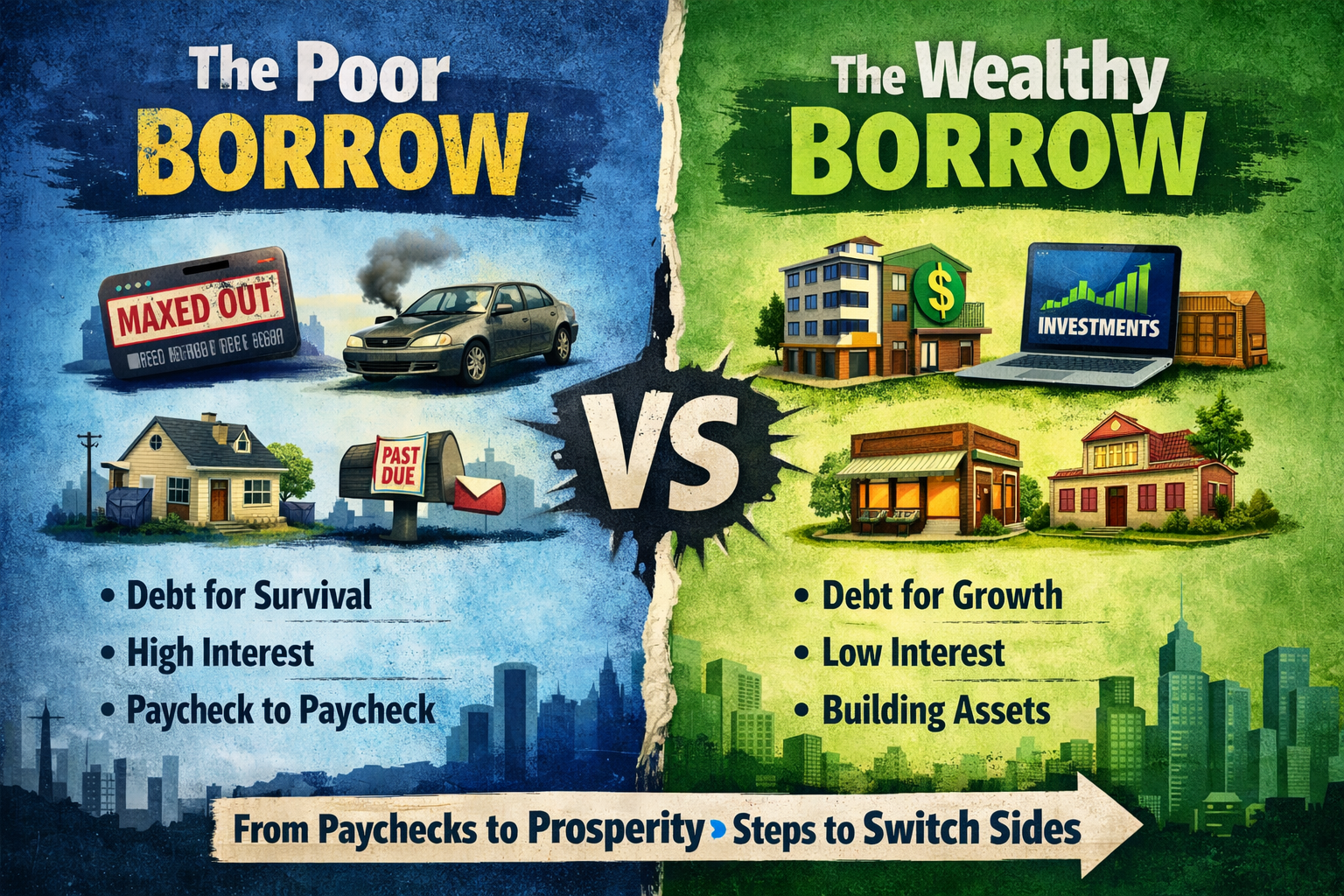
When you’re poor (or financially fragile), borrowing is usually about survival and access.
Common reasons include:
- Covering emergencies with credit cards
- Buying a car just to get to work
- Filling income gaps when paychecks don’t stretch far enough
- Handling unexpected medical or family expenses
This type of borrowing has a few painful characteristics:
- High interest rates
- Short repayment timelines
- No income produced from the debt
- Constant pressure to keep paying
In simple terms, the poor borrow against future income.
If the paycheck stops, the whole system shakes.
Why the Wealthy Borrow
The wealthy borrow for a very different reason: leverage and efficiency.
They often borrow to:
- Acquire income-producing assets
- Expand businesses
- Buy real estate that cash flows
- Access liquidity without selling investments
- Optimize taxes
Their borrowing usually comes with:
- Lower interest rates
- Longer timelines
- Assets backing the loan
- Cash flow that helps pay the debt
They borrow against assets, not paychecks.
If income dips, the asset often keeps working.
The Key Difference (This Is the Whole Game)
Here it is, clean and simple:
- The poor borrow to live
- The wealthy borrow to grow
One creates stress.
The other creates options.
The poor ask:
“Can I afford the monthly payment?”
The wealthy ask:
“What does this loan produce?”
Same system. Very different questions.
How to Switch From Poor Borrowing to Wealthy Borrowing
(Step by Step — No Skipping)
This is the part everyone wants, and almost everyone rushes.
Don’t.
Step 1: Stabilize Before You Optimize
Before wealth, you need breathing room.
- Build a small emergency fund
- Reduce high-interest debt
- Create margin in your monthly cash flow
You can’t invest from panic.
Step 2: Protect and Grow Your Income
Your income is your first asset.
- Improve skills
- Seek raises or better roles
- Add side income if needed
A bigger shovel makes every step easier.
Step 3: Start Owning, Even If It Feels Small
Ownership changes everything.
- 401(k), IRA, index funds
- Automatic, consistent investing
- No timing the market, no drama
This is where income starts turning into assets.
Step 4: Let Time Do the Heavy Lifting
At first, nothing exciting happens.
Then:
- Balances grow
- Dividends appear
- Compounding starts whispering instead of shouting
This is where most people quit — right before it works.
Step 5: Borrow Only When You No Longer Need To
This is the irony no one talks about.
The safest time to borrow is when:
- You have assets
- You have reserves
- You have options
Debt becomes a tool, not a lifeline.
The Truth No One Likes Hearing
There is no shortcut.
There is no jump from “struggling” to “leveraged investor.”
There is only sequence.
Most people don’t fail because they’re lazy —
they fail because they try to borrow like the wealthy before they live like the stable.
Borrowing until you die may sound like the American way of life.
But borrowing strategically, on your terms?
That’s how you quietly exit the game —
while everyone else is still making minimum payments.
Related Articles:
- How a UC Student Balances Scholarships, Work, and Loans
- Why Everything Feels So Expensive: Let’s Talk About Interest Rates (Using a Thermostat!)
Financial and Legal Disclaimer
The content provided on HelpYourFinances.com is intended for general informational purposes only and does not constitute financial, legal, or professional advice. While we make every effort to ensure the accuracy and reliability of the information presented, it is important to understand that financial and legal matters are complex and highly individual.
HelpYourFinances.com is not a licensed financial planner, investment advisor, legal professional, or law firm. The materials on this website should not be considered a substitute for personalized advice from qualified financial advisors, attorneys, or other licensed professionals who can assess your unique situation.
Before making any financial, legal, or other important decisions, we strongly encourage you to seek advice from qualified experts. Any reliance you place on the information provided here is strictly at your own risk. HelpYourFinances.com, its owners, and contributors disclaim any liability for actions taken based on the content of this website.