If you’re someone who takes pride in being financially responsible — especially if you have a family or dependents — one of the smartest, most loving things you can do is create a will. Many of us are laser-focused on saving, investing, and building wealth during our lifetimes, but few take the time to think about what happens after we’re gone. A will ensures that your wishes are respected and your loved ones aren’t left with legal confusion or emotional strain when you’re no longer around.
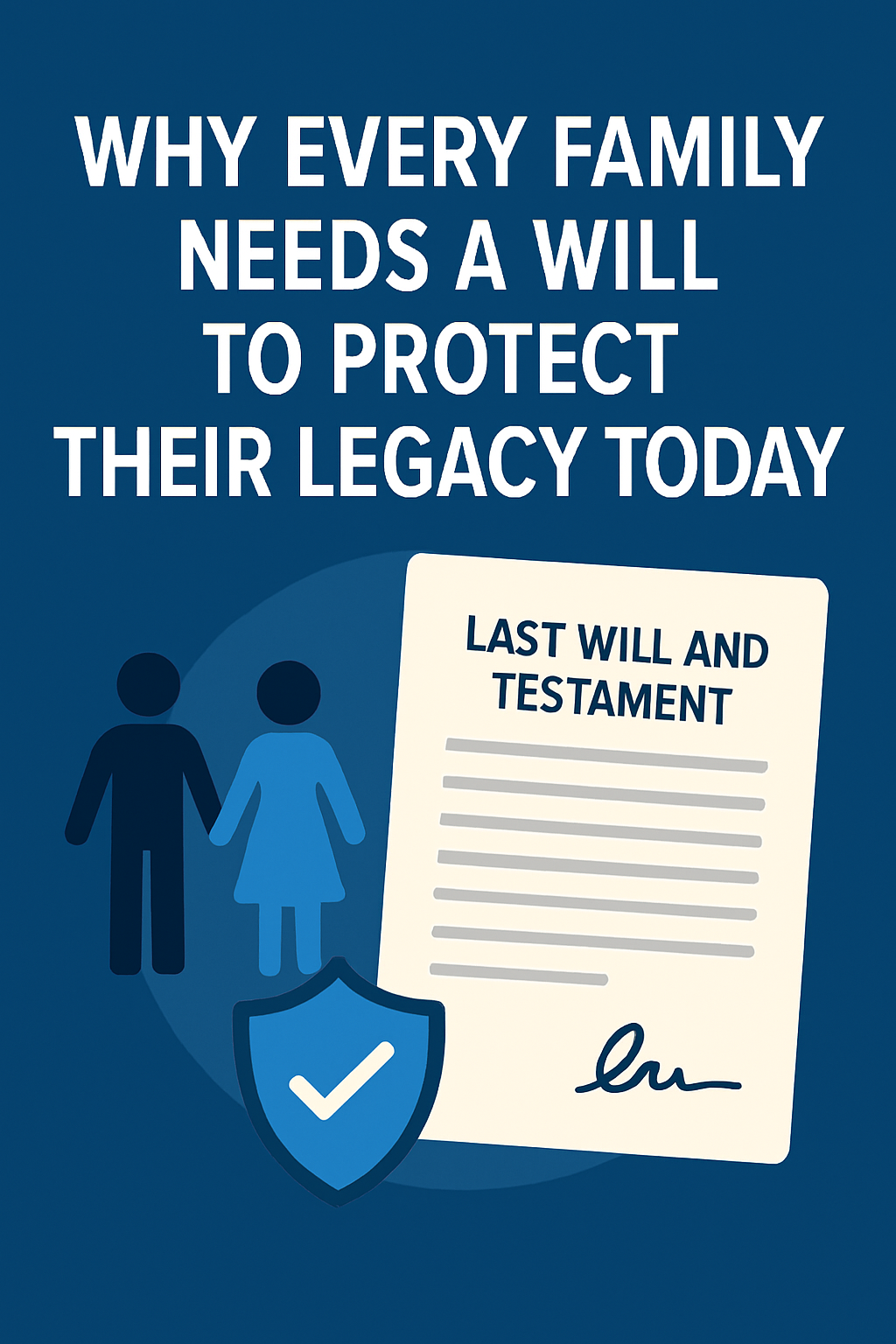
So, what exactly is a will? A will, officially known as a Last Will and Testament, is a legal document that lets you decide what happens to your money, possessions, property, and even your children after you die. It only becomes effective upon your death, which means it doesn’t come into play if you’re just sick, injured, or otherwise unable to make decisions. In those cases, different legal tools are needed (we’ll save that for another post). But when it comes to distributing your estate and making your final wishes known, the will is the anchor of your estate plan.
A typical will includes a few key sections. First, it introduces you — your full legal name and residence — and clearly states that the document is your official will. Then, you appoint someone you trust to act as your executor. This is the person responsible for handling your affairs after you pass: paying off debts, closing accounts, and ensuring your assets go where you intended. The will also outlines specific gifts, which might include property, sentimental items, or cash, and names who should receive them. After that, the will deals with everything else — what’s called the “residue” of your estate — and states who should inherit whatever remains. For parents of minor children, a will can also name a guardian, which is perhaps one of the most important decisions you’ll ever make.
Here’s a simple example of a will format:
Last Will and Testament of John A. Doe
I, John A. Doe, residing in Los Angeles, California, declare this to be my Last Will and Testament. I revoke all previously made wills.
1. Executor:
I appoint my wife, Jane Doe, as Executor of my estate. If she cannot serve, I appoint my brother, Mark Doe.2. Specific Gifts:
- I leave my home at 123 Main Street to my daughter, Emily Doe.
- I leave my Tesla Model 3 to my son, Jack Doe.
- I leave my coin collection to my friend, Peter Lee.
3. Residue:
All remaining assets go to my wife, Jane Doe.4. Guardianship:
If my wife and I pass away, I name my sister, Sarah Kim, as guardian of our children.Signed: July 28, 2025
John A. DoeWitnesses:
(Signatures of two unrelated witnesses)
Now, you might wonder: where does this will go once it’s signed? Do you file it with the government or send it to a courthouse? The answer is no — at least not while you’re alive. In most states, you’re not required to register or file your will with any government agency before your death. That said, you do need to store it somewhere safe and accessible. Common options include a fireproof home safe, a bank’s safe deposit box, or with your estate attorney if you have one. More importantly, you need to tell your executor and key family members where it is. A will that no one can find might as well not exist. Some states offer optional will registration, but most people rely on old-fashioned communication and secure storage.
While a will is a crucial document, it does have its limits. First, it doesn’t help you avoid probate — the court process that verifies your will and oversees asset distribution. That process can be time-consuming and public. If you’re looking for more privacy and efficiency, especially for large or complex estates, you might consider setting up a living trust. Also, a will cannot override beneficiary designations on things like retirement accounts or life insurance policies — those go directly to whoever you named on the form, regardless of what your will says. And importantly, a will only becomes active when you die. If you’re ever incapacitated, you’ll need tools like a power of attorney and a healthcare directive to manage financial and medical decisions while you’re still living.
In the end, a will is about more than just money — it’s about making life easier for the people you love when they’re grieving. It’s about putting your final wishes on paper so your legacy doesn’t get tangled in red tape. Whether you own a little or a lot, rent or own, have young kids or grown ones, you need a will. It’s not complicated or expensive, but it is one of the most powerful things you can do to complete your financial picture. Don’t wait for someday — write your will, and give your family the gift of clarity and peace.
Click here to see Will Planning Checklist: What You Need to Create a Will
Related Articles:
Financial and Legal Disclaimer
The content provided on HelpYourFinances.com is intended for general informational purposes only and does not constitute financial, legal, or professional advice. While we make every effort to ensure the accuracy and reliability of the information presented, it is important to understand that financial and legal matters are complex and highly individual.
HelpYourFinances.com is not a licensed financial planner, investment advisor, legal professional, or law firm. The materials on this website should not be considered a substitute for personalized advice from qualified financial advisors, attorneys, or other licensed professionals who can assess your unique situation.
Before making any financial, legal, or other important decisions, we strongly encourage you to seek advice from qualified experts. Any reliance you place on the information provided here is strictly at your own risk. HelpYourFinances.com, its owners, and contributors disclaim any liability for actions taken based on the content of this website.