Margin Accounts Explained: How Borrowing Can Boost or Break Your Investment
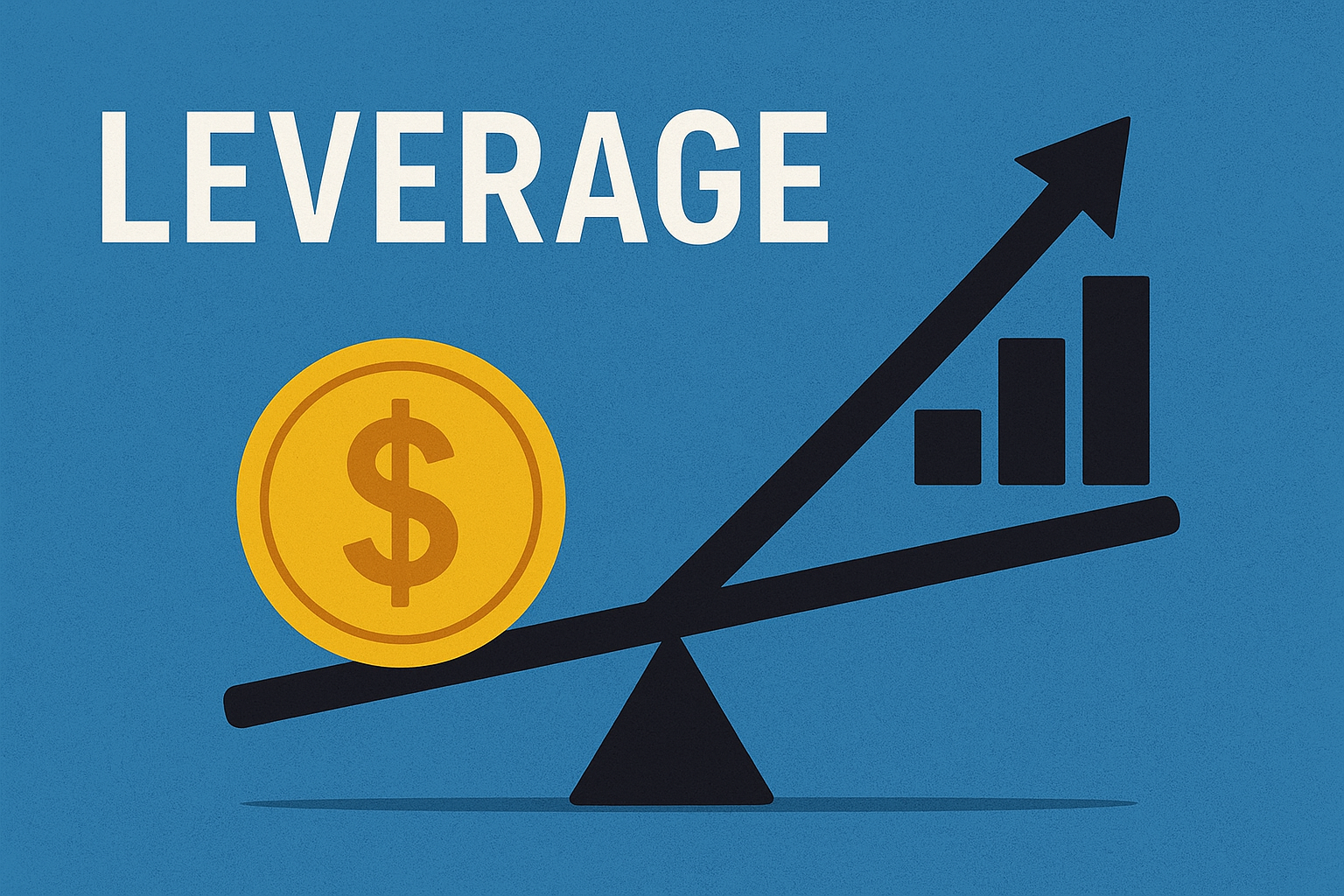
Ever heard someone brag about “buying more stocks on margin” and thought, what does that even mean? A margin account is like borrowing money from your broker to invest — it can amplify your gains, but it can also magnify your losses. Used wisely, it can be a powerful financial tool. Used recklessly, it can wipe out your capital faster than a bad meme stock trade.
Let’s break down what a margin account is, how it works, and the scenarios where it can help or hurt you.
What Is a Margin Account?
A margin account lets you borrow money from your brokerage to buy more securities than your cash balance alone would allow. The investments you buy act as collateral for the loan.
For example:
You have $5,000 in cash, and your broker allows 50% margin. That means you can borrow another $5,000 and buy $10,000 worth of stock.
If that stock goes up 10%, your $10,000 becomes $11,000. After paying back the borrowed $5,000, you’ve made a $1,000 profit — that’s a 20% return on your original $5,000. Pretty sweet.
But if that same stock drops 10%, your position falls to $9,000. You still owe $5,000 to your broker, leaving you only $4,000 — a 20% loss. The leverage cuts both ways.
The Good Scenario: Leverage in Your Favor
When used in moderation, margin can help investors:
- Increase exposure to high-conviction positions.
- Take advantage of short-term opportunities without liquidating long-term holdings.
- Boost returns when markets are trending upward.
Imagine buying dividend-paying stocks using a small margin loan. The dividends from those investments can help offset your margin interest, reducing your net borrowing cost.
Let’s see how this might play out.
Using Dividends to Pay Margin Interest
Suppose you borrow $50,000 on margin at an 8% annual rate. That means your yearly interest cost is $4,000.
You use that borrowed money to buy high-dividend stocks that yield 10% annually, producing $5,000 in dividends per year.
Your dividends cover your $4,000 interest and leave you with a net gain of $1,000 — a positive spread.
This approach is sometimes called a dividend-margin spread strategy. It works best when:
- You have access to a low margin interest rate (some brokers offer 3–5% for larger accounts).
- You invest in stable, high-quality dividend payers, such as Realty Income (O), Enterprise Products Partners (EPD), or dividend ETFs like SCHD or VYM.
- You maintain a conservative borrowing level (typically under 30% of your total portfolio).
Here’s a sample setup:
| Investment | Yield | Allocation |
|---|---|---|
| Realty Income (O) | 5.7% | 40% |
| Enterprise Products Partners (EPD) | 7% | 40% |
| SCHD ETF | 3.5% | 20% |
Average portfolio yield = 5.6%
If your margin rate is 4%, your dividends comfortably cover the interest and leave room for growth.
The Bad Scenario: When Things Go South
Margin becomes dangerous when markets turn against you or when you borrow too aggressively.
Let’s say you borrowed that same $50,000 and the stocks fall 25%. Your $100,000 total investment (your $50,000 cash + $50,000 margin loan) is now worth $75,000. You still owe the broker $50,000, leaving you just $25,000 in equity — half of your original capital gone.
Even worse, if your equity ratio falls below the broker’s maintenance margin requirement (usually 25–30%), you’ll face a margin call. That’s when the broker demands you deposit more cash or sell securities to restore balance. If you don’t act fast, the broker can liquidate your holdings automatically, often at a loss.
The key mistake many investors make is thinking the market will “come back soon.” When you’re trading on margin, time is not your friend — interest keeps accruing, and forced liquidation can happen overnight.
Margin vs. Securities-Backed Loan (SBL)
It’s worth mentioning another borrowing option that’s often misunderstood — the securities-backed loan (SBL). While margin accounts are used to buy more investments, SBLs are used to borrow cash without selling your investments.
With an SBL:
- You can borrow up to 70–80% of your portfolio’s value.
- The funds can be used for anything except buying more securities (like real estate or business expenses).
- The interest rate is lower — often 3–6%.
- There are no margin calls in the trading sense, just collateral monitoring.
Wealthy investors often use SBLs to unlock liquidity while keeping their investments compounding and avoiding capital gains taxes. Margin, on the other hand, is more of a tactical tool for active investors.
The Takeaway
A margin account can be a powerful ally or a silent assassin, depending on how you use it. The smartest investors:
- Keep margin debt modest (usually under 30% of total portfolio).
- Focus on dividend-rich, stable assets to offset borrowing costs.
- Never ignore the risk of a margin call.
Using dividends to pay margin interest can make sense, but only if you respect the math and the risk. It’s not free money — it’s a balancing act between reward and responsibility.
The rule of thumb?
If you sleep better at night without leverage, you don’t need margin.
If you choose to use it, treat it like fire — useful, but never to be played with.
Related Articles:
Financial and Legal Disclaimer
The content provided on HelpYourFinances.com is intended for general informational purposes only and does not constitute financial, legal, or professional advice. While we make every effort to ensure the accuracy and reliability of the information presented, it is important to understand that financial and legal matters are complex and highly individual.
HelpYourFinances.com is not a licensed financial planner, investment advisor, legal professional, or law firm. The materials on this website should not be considered a substitute for personalized advice from qualified financial advisors, attorneys, or other licensed professionals who can assess your unique situation.
Before making any financial, legal, or other important decisions, we strongly encourage you to seek advice from qualified experts. Any reliance you place on the information provided here is strictly at your own risk. HelpYourFinances.com, its owners, and contributors disclaim any liability for actions taken based on the content of this website.