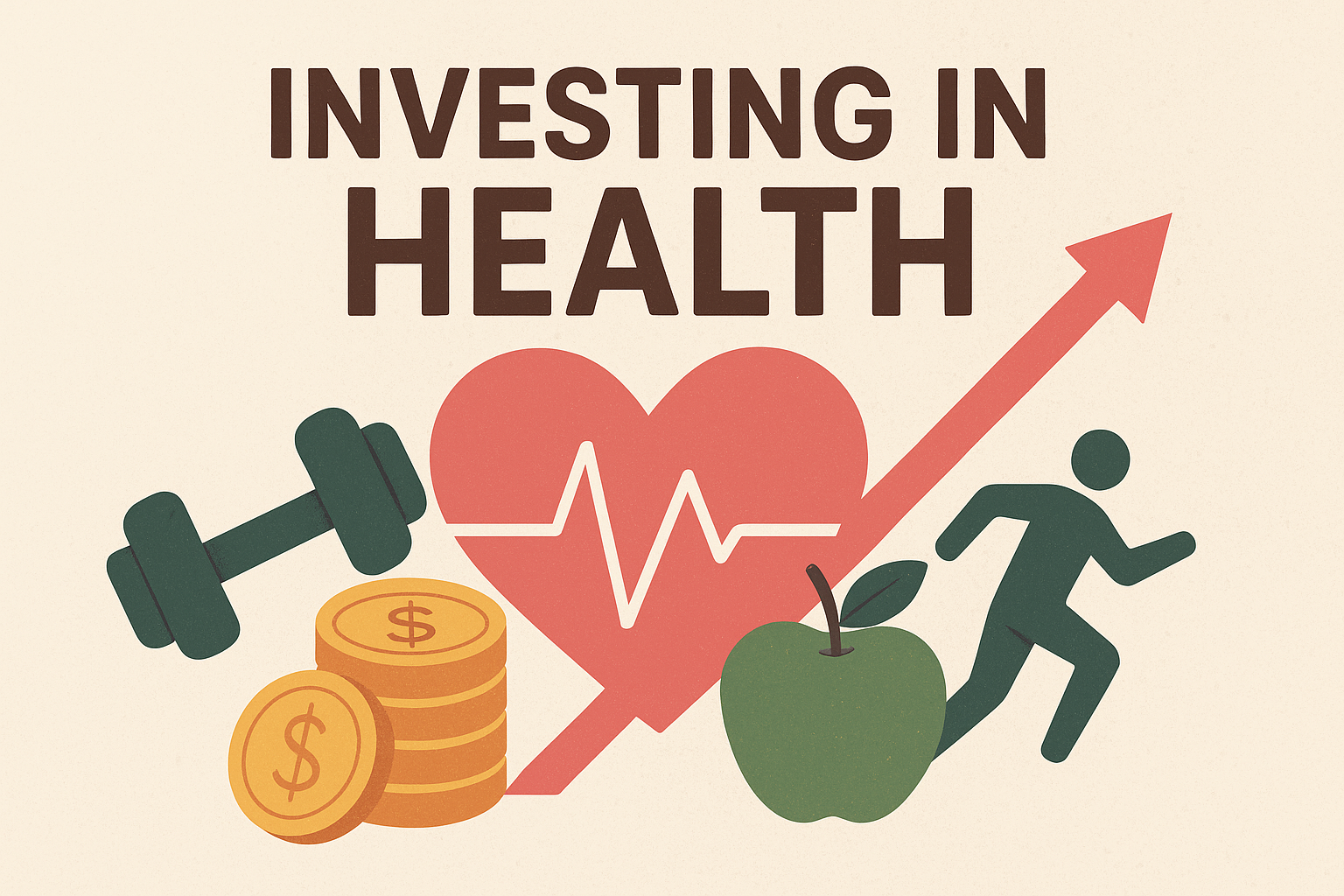
When most people hear the word investment, their minds jump straight to stocks, bonds, or maybe a 401(k). And they’re right—investing money is one of the smartest ways to build wealth. Why? Because of the power of compounding. Small, consistent contributions today can snowball into something much bigger decades from now.
But here’s the part many of us forget: your health works the same way.
The Power of Compounding in Finance
Let’s say you invest $200 a month starting at age 25. Thanks to compounding, by the time you’re 65, that money could grow into hundreds of thousands of dollars—even if you never increase your contribution.
The lesson? Start early, stay consistent, and let time do the heavy lifting.
The Power of Compounding in Health
Now, imagine applying that same principle to your body.
- Skipping exercise today doesn’t hurt much right now—but compound 20 years of inactivity, and you may struggle with mobility, strength, and even independence.
- Choosing fast food over home-cooked meals once in a while isn’t the issue—but compound that habit over decades, and it may lead to heart disease, diabetes, or chronic fatigue.
- Ignoring flexibility and mobility? By your 50s and 60s, the ability to walk comfortably, play with your kids, or even avoid injuries could be gone.
Just like in finance, today’s small decisions compound into tomorrow’s reality.
Sedentary Living: The Hidden Withdrawal
Here’s the hard truth about American lifestyles today:
- Average sitting time ≈ 9.5 hours per day. Between office chairs, commutes, and Netflix, most of our waking hours are spent seated.
- About 38% of Americans sit more than 8 hours daily. Long periods of sitting are linked to higher risks of heart disease, diabetes, and premature death.
- 1 in 4 people sit excessively and also fail to meet physical activity guidelines. That combination is like withdrawing money from your health account without ever making deposits.
The Numbers for 30s and 40s
What’s even more concerning is how this looks for people in their 30s and 40s—the very decades when most of us are focused on careers, families, and “having no time”:
- Only about 29% of men and 23% of women ages 35-49 meet both aerobic and strength-training guidelines. That means more than 7 in 10 aren’t moving enough.
- For ages 45-64, it drops further—only about 20% meet both guidelines.
- Strength training is especially neglected: only 44% of men and 34% of women ages 18-44 do enough, and it falls sharply in the 40s.
- Sedentary behavior compounds—research shows sitting more than 8 hours a day combined with low activity increases risks of cardiovascular disease, type 2 diabetes, and even early death by as much as 50–100%.
In other words: the 30s and 40s are often when people start losing momentum—just when the compounding effect of good habits could be the most powerful.
Health = Your Lifetime Portfolio
Think of your body as your most valuable asset. Your muscles, endurance, and mobility are like your “retirement account” for the second half of life.
- Exercise is your contribution. Every workout is like putting money into your 401(k).
- Nutrition is your growth rate. Good food choices fuel better long-term returns.
- Sleep and recovery are your dividends. They pay you back with energy, focus, and resilience.
The earlier you start, the bigger the payoff. But it’s never too late to invest. Even small, consistent changes now can create a healthier, stronger future.
A Simple Truth
If you want financial freedom in retirement, you need to invest early and often.
If you want physical freedom in retirement, you need to do the same.
Because here’s the reality: you can’t buy back your health.
Final Thought
In finance, people often regret not starting sooner. The same is true for health. Twenty years from now, your future self will either thank you or resent you for the choices you made today.
So start now: lift, walk, cook, stretch. Think of it as your Health 401(k). Because while money can buy comfort, only health can buy you the time and ability to enjoy it.
Related Articles:
Financial and Legal Disclaimer
The content provided on HelpYourFinances.com is intended for general informational purposes only and does not constitute financial, legal, or professional advice. While we make every effort to ensure the accuracy and reliability of the information presented, it is important to understand that financial and legal matters are complex and highly individual.
HelpYourFinances.com is not a licensed financial planner, investment advisor, legal professional, or law firm. The materials on this website should not be considered a substitute for personalized advice from qualified financial advisors, attorneys, or other licensed professionals who can assess your unique situation.
Before making any financial, legal, or other important decisions, we strongly encourage you to seek advice from qualified experts. Any reliance you place on the information provided here is strictly at your own risk. HelpYourFinances.com, its owners, and contributors disclaim any liability for actions taken based on the content of this website.