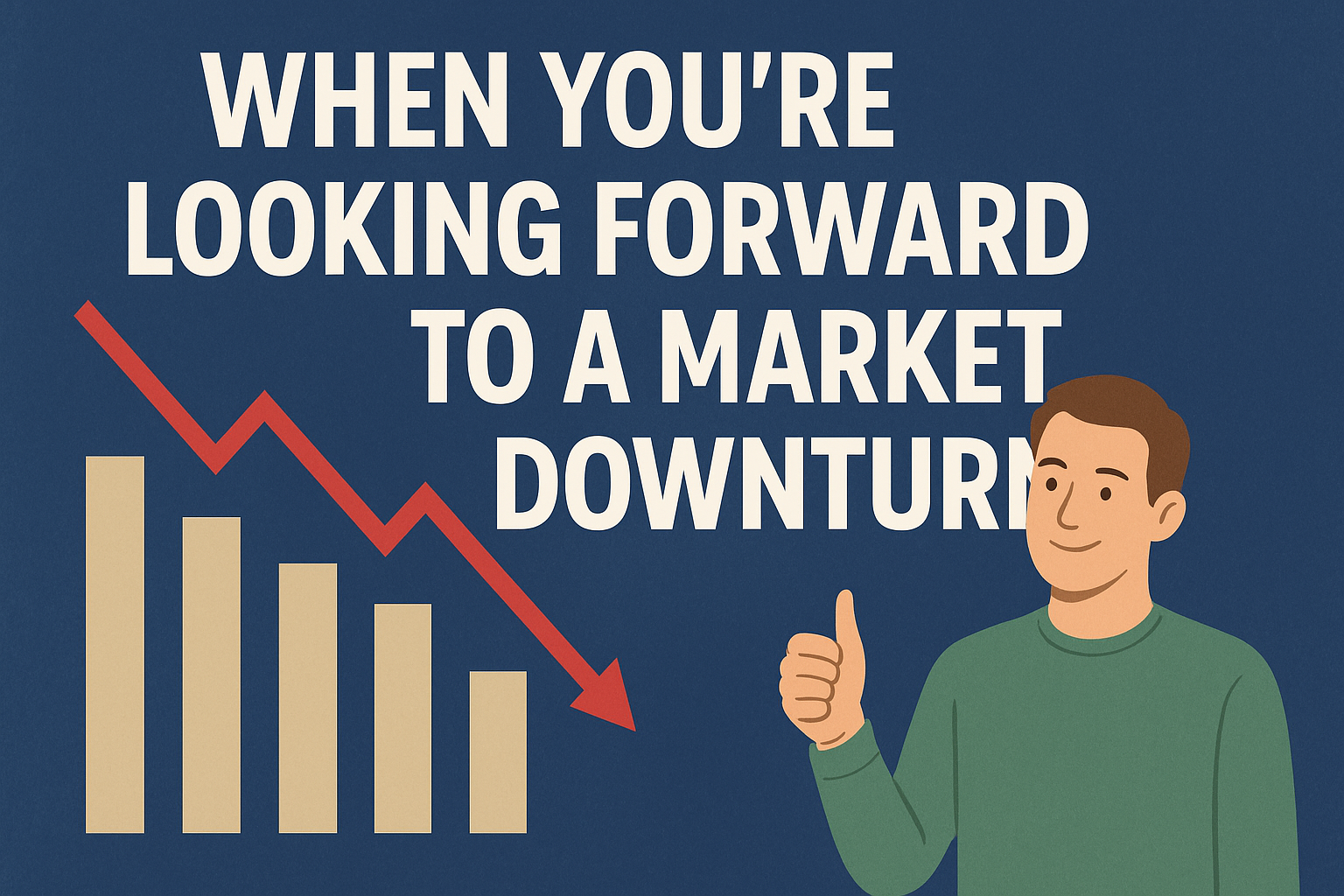
When you first start investing, the stock market feels like a rollercoaster. You log into your account every day, refreshing the numbers, and your emotions rise and fall with each tick of the market. When the market is up, you feel unstoppable. But when the market dips? Panic sets in. My money is gone. I have less than yesterday. Should I sell before I lose more?
If you’ve ever felt that fear, you’re not alone. Most of us go through that stage as new investors. The instinct to panic and “jump ship” when prices fall is strong. But with time, experience, and a shift in perspective, something changes. Instead of dreading a downturn, you start to welcome it.
Learning to Embrace the Downturn
As I’ve grown older and more accustomed to market cycles, I’ve realized something simple but powerful: markets will always go up, and markets will always go down. That’s the nature of investing. The dips aren’t the end of the world—they’re part of the journey.
And here’s the real turning point: I’ve started to embrace those downturns. Why? Because they’re opportunities to buy more at a discount.
Think about it this way: if you loved a product at full price, wouldn’t you be thrilled to see it go on sale? The same principle applies to investing. A market dip is like your favorite ETF or stock going on clearance.
The Turning Point: From Fear to Conviction
So, when does this mindset shift happen? For me, there were three key turning points:
1. Crossing the $100K Milestone
The first major turning point was reaching $100,000 in investments. That number isn’t just psychological—it’s financial momentum. At this level, compounding starts to feel real. Your portfolio’s growth isn’t just from what you add; it’s from what it generates on its own.
I wrote more about this in The Significance of Reaching $100,000 in Investments, but the bottom line is this: once you’ve hit six figures, a 10% swing in the market doesn’t feel like an abstract percentage anymore. It’s $10,000 up—or $10,000 down. Instead of fear, though, I started to see those $10,000 drops as a reminder that downturns were the best chance to keep buying and growing.
2. Having Conviction in My Investments
The second shift came from developing conviction. Early on, I dabbled in different stocks, chasing what was hot. That made it harder to stomach downturns—because what if I had picked the wrong company? But once I built conviction in the assets I owned, particularly long-term ETFs and broad index funds, the fear melted away.
Now, when the market dips, I don’t ask “what if this never recovers?” Instead, I remind myself: these are solid investments with decades of history and a future ahead. That conviction turns a downturn into an opportunity.
3. Choosing More ETFs Than Single Stocks
The third shift was moving from mostly individual stocks to ETFs. Single stocks can be exciting, but they’re also risky. When one company struggles, your portfolio takes a direct hit. ETFs, on the other hand, spread the risk across dozens or even hundreds of companies.
That diversification gave me peace of mind. With ETFs making up more of my portfolio, I didn’t have to worry as much about the daily ups and downs of one company. Instead, I could think long-term, knowing the market as a whole has always recovered.
Why a Downturn is Actually a Gift
Looking forward to a downturn might sound strange to new investors. But once you understand the cycles, build conviction, and diversify smartly, you realize downturns aren’t disasters—they’re gifts. They’re your chance to buy more shares at a lower cost, setting yourself up for bigger gains when the market rebounds.
The key is staying invested, avoiding panic, and remembering the bigger picture. Over decades, the market has always trended upward. So, instead of dreading the next dip, maybe start asking: How can I take advantage of it?
👉 Takeaway: If you’re new to investing, don’t let fear drive your decisions during downturns. Focus on building conviction, reaching key milestones like $100K, and diversifying with ETFs. Over time, you may find yourself not just enduring downturns—but actually looking forward to them.
Related Articles:
- Why I Switched from Roth 401(k) to Traditional 401(k)
- Why Investing Is More Psychological Than Mathematical
Financial and Legal Disclaimer
The content provided on HelpYourFinances.com is intended for general informational purposes only and does not constitute financial, legal, or professional advice. While we make every effort to ensure the accuracy and reliability of the information presented, it is important to understand that financial and legal matters are complex and highly individual.
HelpYourFinances.com is not a licensed financial planner, investment advisor, legal professional, or law firm. The materials on this website should not be considered a substitute for personalized advice from qualified financial advisors, attorneys, or other licensed professionals who can assess your unique situation.
Before making any financial, legal, or other important decisions, we strongly encourage you to seek advice from qualified experts. Any reliance you place on the information provided here is strictly at your own risk. HelpYourFinances.com, its owners, and contributors disclaim any liability for actions taken based on the content of this website.