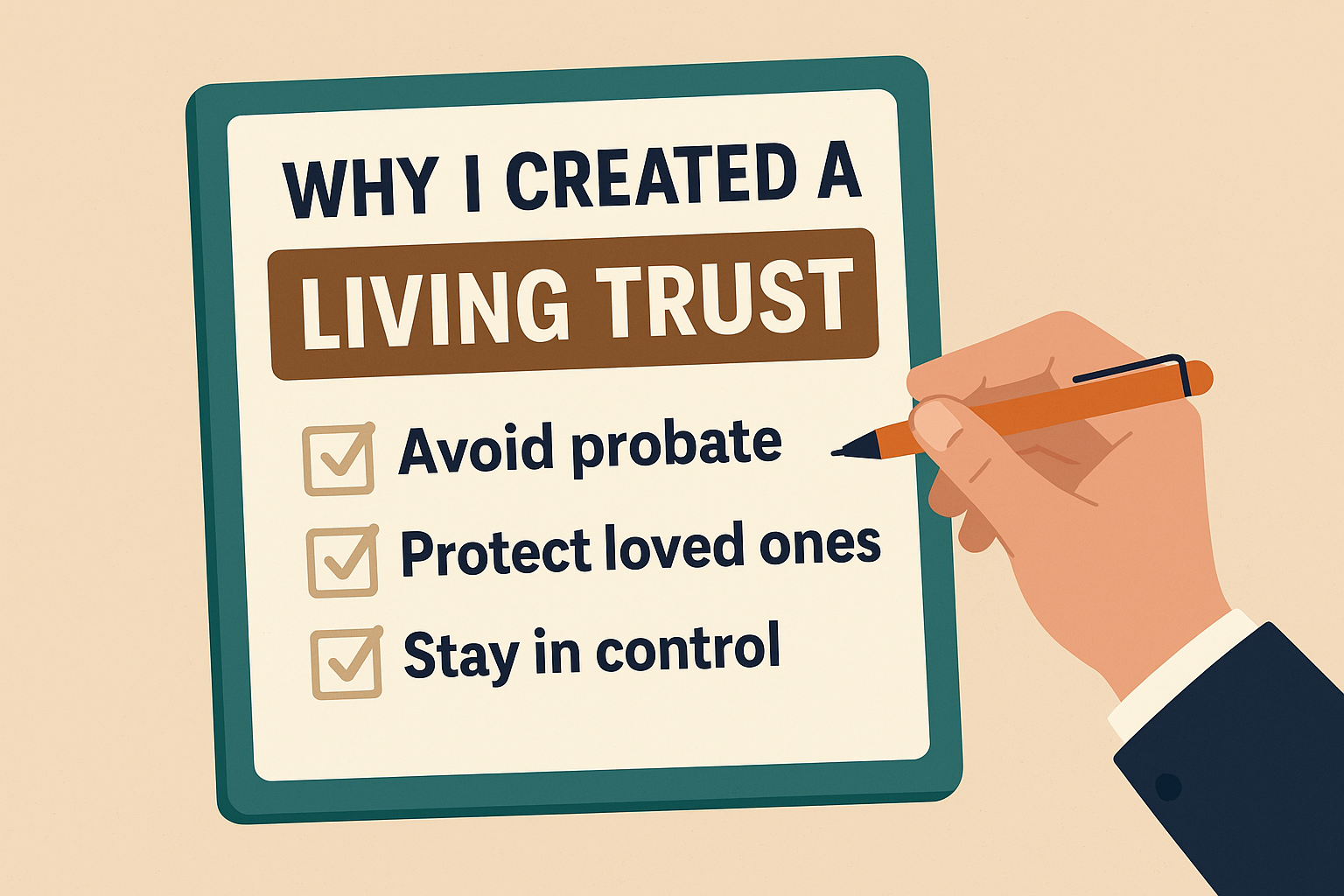
I used to think a Living Trust was just for the ultra-wealthy—you know, people with private jets, vacation homes, and family lawyers on retainer. But a few years ago, when a close friend passed away unexpectedly, I watched his family go through a brutal probate process that dragged on for almost a year.
Even though he had a will, the court still had to validate it. His wife couldn’t access the bank accounts for months. The kids’ inheritance was tied up. And the entire ordeal played out in public records, which felt like salt in the wound.
That’s when I realized: a Living Trust isn’t just for the rich—it’s for the prepared.
🧾 What Is a Living Trust, Really?
Let’s keep it simple:
A Living Trust is a legal document that lets you transfer ownership of your assets (your house, bank accounts, investments, etc.) to a trust that you control during your lifetime. You’re the trustee, and you get to use your assets just like before. But the magic happens when you pass away—or even become incapacitated.
Your chosen successor trustee steps in and distributes your assets according to your wishes, without going through probate.
Think of it as creating a “financial suitcase” that holds all your valuables. When the time comes, your successor simply picks up that suitcase and follows your instructions—no courtroom, no drama.
🧩 What Goes Into a Living Trust?
Here’s a peek inside the toolbox:
- Grantor: That’s you—the person creating the trust.
- Trustee: Also you, while you’re alive and well.
- Successor Trustee: The person who takes over if you’re unable to manage things or after you pass.
- Beneficiaries: The people (or causes) you want to leave your assets to.
- Trust Document: The legal paperwork that outlines everything—who gets what, when, and under what conditions.
And remember: the trust only controls what you put into it. If you leave assets out, they still go through probate.
🛠️ How Do You Create a Living Trust?
Honestly, the process isn’t as scary or expensive as most people think. Here’s the step-by-step, in plain English:
1. List Your Assets
Make a list of everything you own—real estate, bank accounts, investments, even sentimental heirlooms.
2. Choose Your People Wisely
Decide who your successor trustee will be. This person should be organized, trustworthy, and capable of managing money. Also, choose your beneficiaries—the people or charities you want to inherit your assets.
3. Write the Trust Document
You can:
- Hire an estate planning attorney (best for complex situations)
- Use trusted online platforms (great for straightforward needs)
Make sure the document includes detailed instructions for what happens if you’re incapacitated or pass away.
4. Fund the Trust
This is the part most people forget—and it’s crucial. You need to transfer ownership of your assets into the trust’s name. That might mean:
- Filing a new deed for your home
- Updating bank accounts and investment accounts
- Assigning personal property with a transfer list
If you skip this step, the trust is basically an empty suitcase.
5. Store It Properly
The trust document isn’t filed with the state—it’s private. But that means you need to keep it safe and accessible. Your options:
- A fireproof safe at home
- With your attorney
- Secure cloud storage (with password access for your trustee)
- A bank safe deposit box (make sure someone else can access it!)
🧠 Why It Matters—Even If You’re Not “Rich”
This isn’t just about money. It’s about avoiding chaos.
With a Living Trust:
- Your family avoids probate
- Your financial wishes are carried out smoothly
- Everything remains private
- You’re prepared for the unexpected (like an accident or illness)
And perhaps most importantly, it’s a final act of love for the people you care about.
✍️ Final Thoughts
If you’re a homeowner, a parent, or simply someone who doesn’t want their loved ones jumping through legal hoops after you’re gone, a Living Trust is one of the smartest moves you can make.
You don’t need millions in the bank. You just need the foresight to act—and the willingness to protect your legacy.
Because in the end, estate planning isn’t about death.
It’s about making life easier for the people you leave behind.
Related Articles:
- Why Every Family Needs a Will to Protect Their Legacy Today
- The Hidden Tax Cost of Dividend Income in Retirement
Financial and Legal Disclaimer
The content provided on HelpYourFinances.com is intended for general informational purposes only and does not constitute financial, legal, or professional advice. While we make every effort to ensure the accuracy and reliability of the information presented, it is important to understand that financial and legal matters are complex and highly individual.
HelpYourFinances.com is not a licensed financial planner, investment advisor, legal professional, or law firm. The materials on this website should not be considered a substitute for personalized advice from qualified financial advisors, attorneys, or other licensed professionals who can assess your unique situation.
Before making any financial, legal, or other important decisions, we strongly encourage you to seek advice from qualified experts. Any reliance you place on the information provided here is strictly at your own risk. HelpYourFinances.com, its owners, and contributors disclaim any liability for actions taken based on the content of this website.