One of the best ways to save money on taxes today while building wealth for tomorrow is by maximizing your contributions to a 401(k). A 401(k) is a retirement savings account offered through your employer that allows you to defer part of your salary directly into investments. The beauty of this plan is that the money you put in is deducted from your gross income before taxes are calculated. In simple terms, your taxable income shrinks the more you contribute, which means a lower tax bill now, plus savings for the future.
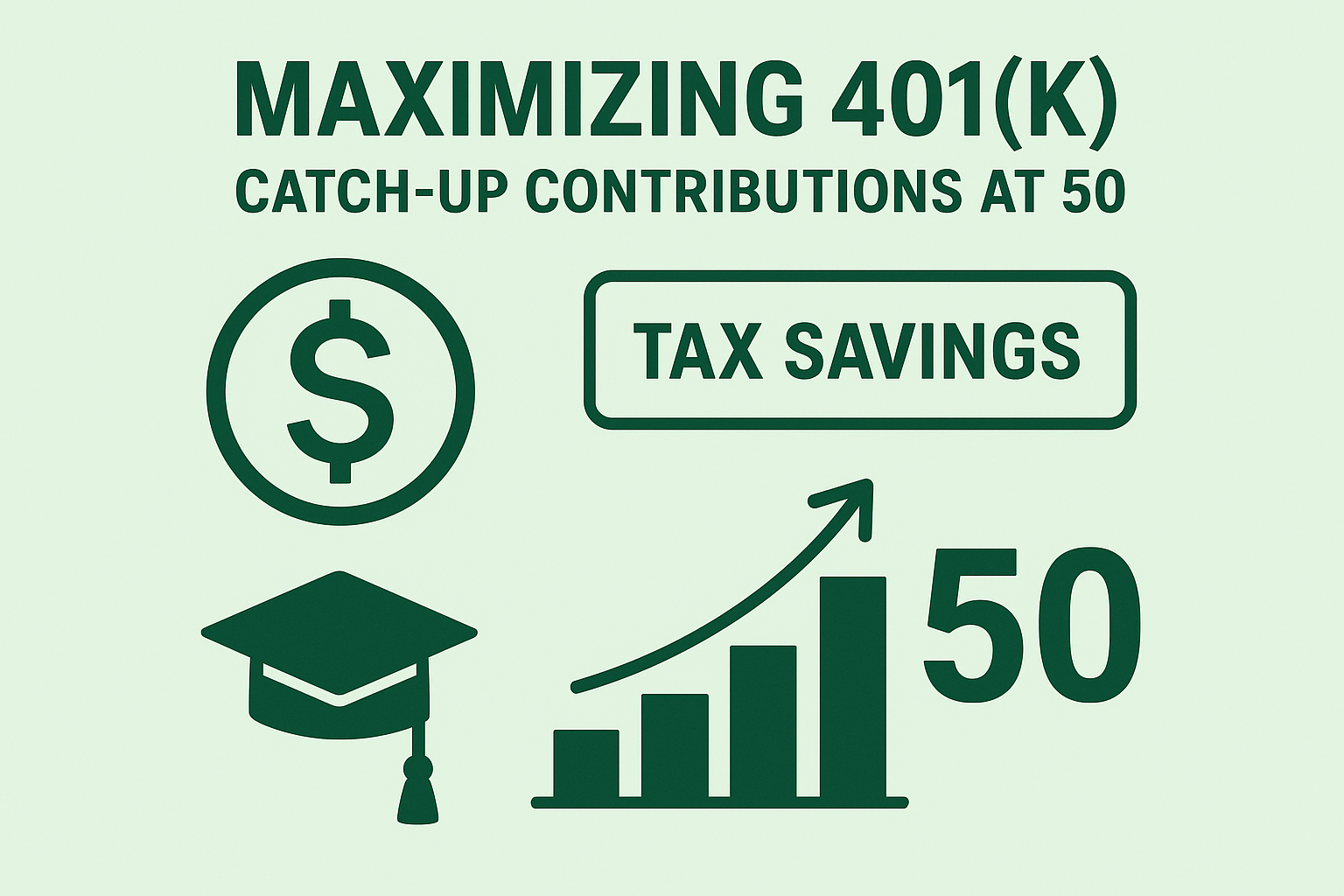
Of course, as with most good things, there are limits. The IRS sets a cap on how much you can contribute each year. For 2025, the maximum employee contribution to a 401(k) is $23,000. But if you’re age 50 or turning 50 during 2025, you get an additional opportunity called a catch-up contribution. This allows you to put in an extra $7,500, raising your total contribution limit to $30,500 for the year. That’s a significant boost, especially if you’re trying to supercharge your retirement savings during your higher-earning years.
This leads to a common question: when exactly can you start taking advantage of this catch-up contribution? The IRS makes this surprisingly simple. As soon as the calendar flips to the year in which you’ll turn 50, you’re eligible. You don’t need to wait until your actual birthday. Whether you turn 50 in January, July, or December, you can begin contributing the higher amount starting January 1 of that year. Think of it as the IRS giving you credit for your birthday early. This rule ensures that everyone turning 50 has the same opportunity to maximize their contributions, regardless of when their birthday falls.
Now, once you know your limit, the next question becomes how you want to contribute. People approach this in different ways depending on their financial personality and budgeting style. Some like to front-load their contributions by maxing them out as quickly as possible. For example, if someone gets a big bonus or simply prefers to prioritize retirement savings, they might funnel a large portion of their paycheck toward their 401(k) in the early months of the year. The benefit of this method is that your money has more time in the market, giving it extra months of potential growth. The downside is that once you hit your contribution limit, those deductions stop. When that happens, your take-home pay suddenly jumps, almost like you’ve been given a mid-year promotion. That’s not necessarily a bad thing, but it can make your cash flow feel inconsistent.
Personally, I prefer a steadier approach. I spread my contributions evenly across all twelve months. By setting aside a consistent percentage of each paycheck, I create stability in my budget. My take-home pay remains predictable, which makes it easier to plan for bills, discretionary spending, and other financial goals throughout the year. It’s less exciting than getting a sudden boost in income halfway through the year, but I value the peace of mind that comes with knowing my budget won’t fluctuate too much.
Ultimately, the method you choose depends on your comfort level and your financial situation. Some people thrive on the discipline of front-loading, while others appreciate the balance of spreading things out. There’s no wrong choice here—as long as you’re contributing and working toward the maximum, you’re doing yourself a huge favor.
The real benefit of contributing to a 401(k) goes beyond the short-term tax savings. While lowering your taxable income today is great, the real prize is the nest egg you’re building for your future self. Every dollar you invest grows tax-deferred, meaning you don’t pay taxes on the gains until you withdraw the money in retirement. By then, many people are in a lower tax bracket, which makes the deal even sweeter. On top of that, many employers offer matching contributions, which is essentially free money added to your retirement account. Missing out on a match is like leaving part of your paycheck on the table.
When you think about it, contributing to your 401(k) is a win-win. You save money on taxes now, you create stability or flexibility in your budgeting (depending on your contribution style), and you’re setting yourself up for financial independence down the road. And if you’re entering your 50s, the catch-up contribution is like a golden opportunity to pour even more fuel into your retirement engine.
So whether you’re planning to max out your contributions at the beginning of the year, spread them out evenly like I do, or find some combination that works best for your lifestyle, the important thing is that you take advantage of what’s available. Your future self will thank you, and your present self will enjoy a little relief come tax season.
Related Articles:
- Roth or Traditional 401(k)? Best Option for Long-Term Growth
- Why You Should Start Saving Early, Real Life Experience.
Financial and Legal Disclaimer
The content provided on HelpYourFinances.com is intended for general informational purposes only and does not constitute financial, legal, or professional advice. While we make every effort to ensure the accuracy and reliability of the information presented, it is important to understand that financial and legal matters are complex and highly individual.
HelpYourFinances.com is not a licensed financial planner, investment advisor, legal professional, or law firm. The materials on this website should not be considered a substitute for personalized advice from qualified financial advisors, attorneys, or other licensed professionals who can assess your unique situation.
Before making any financial, legal, or other important decisions, we strongly encourage you to seek advice from qualified experts. Any reliance you place on the information provided here is strictly at your own risk. HelpYourFinances.com, its owners, and contributors disclaim any liability for actions taken based on the content of this website.