When I first started building my main investment account, my strategy was simple: take advantage of opportunities when they show up. If a stock dropped 10% in one day, I’d scoop it up. Some of those bets bounced back quickly in the following days or weeks, while others are still sitting in the red. It hasn’t always been perfect, but that’s the nature of investing—you take swings, and some connect better than others.
At the same time, I’ve been steadily dollar-cost averaging into more stable, dividend-focused holdings. These are my “peace of mind” investments—companies and ETFs like O, SCHD, VTI, and AOTG. Together, they give me balance and stability alongside the more opportunistic buys. Right now, my overall portfolio sits at about a 4% dividend yield. That’s solid, but I see room for improvement.
Some of my holdings pay no dividend at all (like certain tech names), while others pay modest amounts. Then there are the heavy hitters: ARLP, yielding around 10%, and TSPY, a covered call ETF yielding around 13%. These income producers help fuel cashflow, but they make up a smaller slice of the pie than I’d like.
The Next Chapter: Rebalancing for a Cash Engine
Over the next few months, my main objective is to rebalance the portfolio with a clear purpose: raise the overall dividend yield to around 6–7%. Why? Because more dividends mean more cash hitting my account on a regular basis, which I can then reinvest into either growth opportunities or additional dividend stocks.
The plan is straightforward. New contributions, along with dividend income I receive, will be focused on stocks and ETFs yielding above 6%. That means adding to positions like TSPY, ARLP, UPS, EPD, and PFE. These are companies and funds that can act as the “cash engine” in my portfolio, providing reliable income while still leaving room for upside.
The Allocation Blueprint
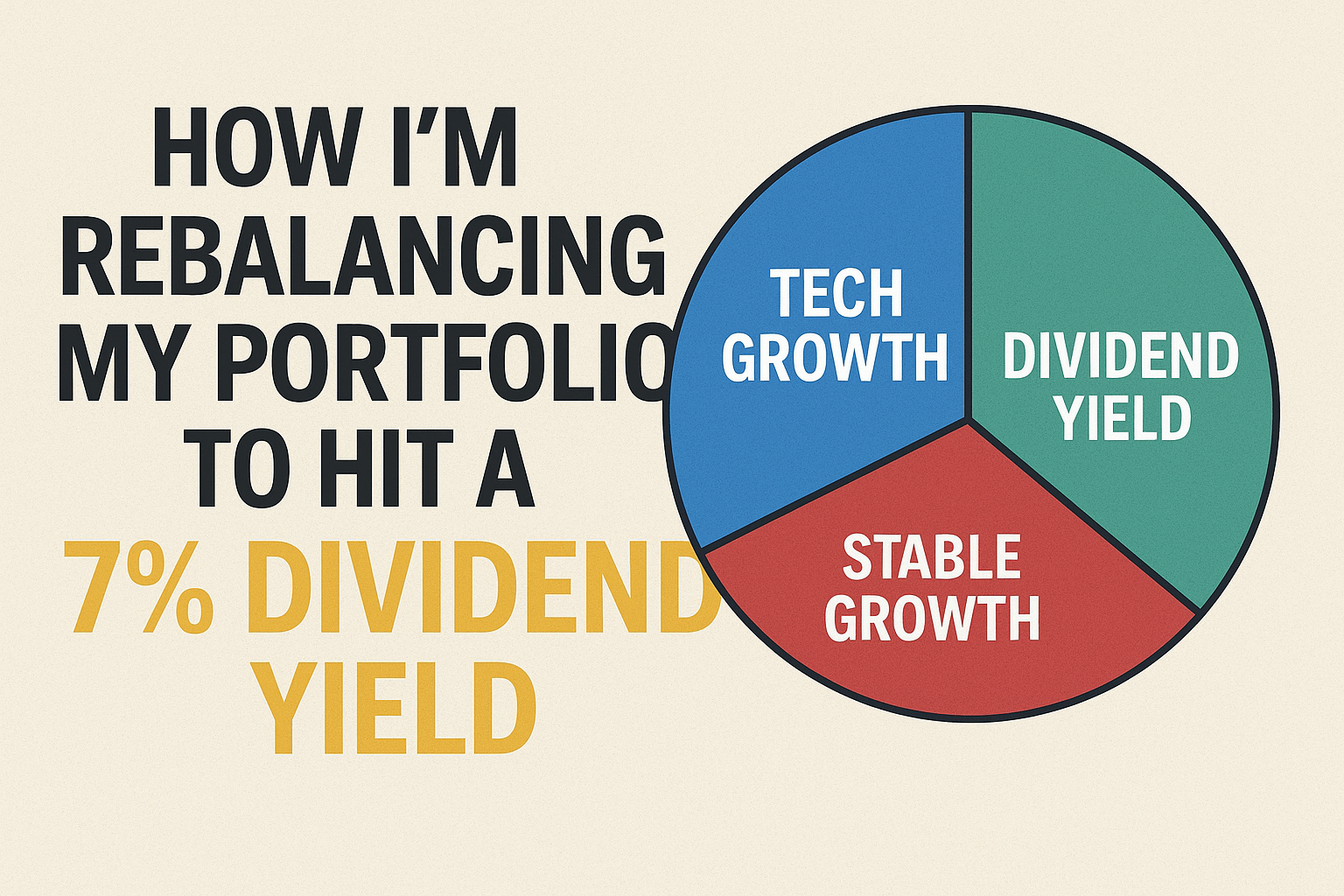
To keep things balanced, I’m working toward a three-part structure:
- 33% Stable Growth → long-term anchors like VTI, AAPL, O, FXAIX, SCHD.
- 33% High-Growth Tech → the upside drivers such as TSLA, NVDA, QCOM, PLTR, TEM.
- 34% High-Dividend Yield → income producers like ARLP, TSPY, UPS, EPD, PFE.
This approach gives me the best of all worlds:
- Growth from tech stocks that can supercharge returns.
- Stability from broad market ETFs and dividend stalwarts.
- Cashflow from high-yield names that constantly put money back in my pocket to reinvest.
Why This Matters to Me
I think of this strategy as building three engines that work together. The growth engine pushes the portfolio forward, the stability engine keeps me grounded during market turbulence, and the cash engine keeps refueling everything else.
Reaching a 6–7% yield isn’t just about chasing numbers—it’s about creating a sustainable system where my portfolio pays me to keep growing it. Over time, that compounding effect can be powerful.
What do you think—does this kind of three-engine portfolio resonate with you? Would you lean more toward dividends, growth, or stability in your own investing?
Related Articles:
Financial and Legal Disclaimer
The content provided on HelpYourFinances.com is intended for general informational purposes only and does not constitute financial, legal, or professional advice. While we make every effort to ensure the accuracy and reliability of the information presented, it is important to understand that financial and legal matters are complex and highly individual.
HelpYourFinances.com is not a licensed financial planner, investment advisor, legal professional, or law firm. The materials on this website should not be considered a substitute for personalized advice from qualified financial advisors, attorneys, or other licensed professionals who can assess your unique situation.
Before making any financial, legal, or other important decisions, we strongly encourage you to seek advice from qualified experts. Any reliance you place on the information provided here is strictly at your own risk. HelpYourFinances.com, its owners, and contributors disclaim any liability for actions taken based on the content of this website.