
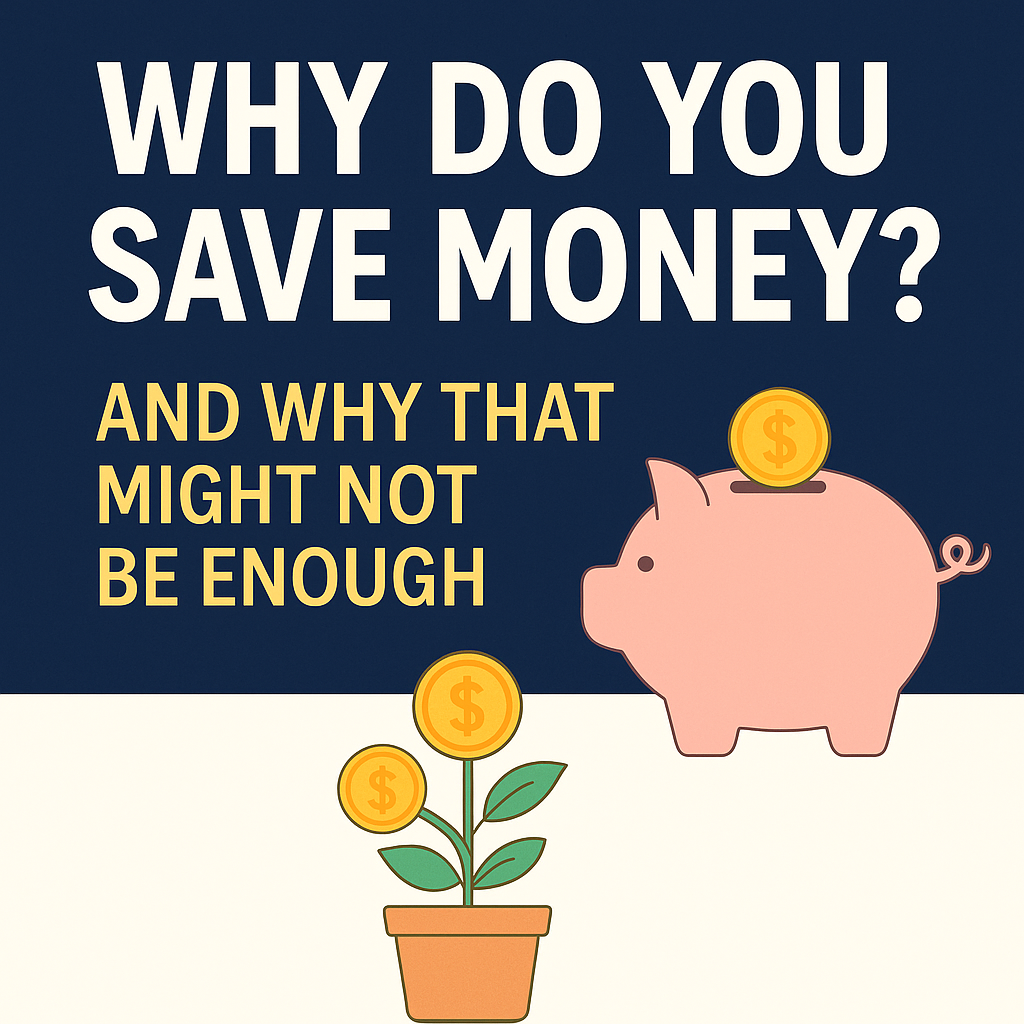
Let’s have a real conversation: Are you saving money with purpose—or just saving out of habit or fear?
Don’t get me wrong—saving is good. It’s responsible. It’s wise. But saving just for the sake of it? That might not be helping you as much as you think. In fact, if your money is sitting idle, untouched, and uninvested, it may actually be losing value due to inflation.
Saving With No Purpose? You Might Be Losing
Here’s what a lot of people don’t realize: saving too much and letting that money sit in a low-interest savings account can actually hurt your financial growth. Why? Because inflation slowly eats away at your money’s purchasing power.
You may have $20,000 in the bank, but in 5 years, that same $20,000 might only buy what $17,000 can buy today. That’s not wealth building. That’s erosion.
So, what’s the better approach? Saving with a purpose.
The Purpose-Driven Mindset: What It Means
A purpose-driven mindset sees money as a tool, not a trophy. Saving isn’t the final destination—it’s the vehicle that takes you somewhere valuable. The goal isn’t to hoard cash; it’s to build a life of freedom, flexibility, and fulfillment.
This mindset is about giving every dollar a job—saving for a reason that builds your future, not just comforts your present.
Step 1: Save for Emergencies (This Is Your Safety Net)
Before anything else, build a 3–6 month emergency fund. This should cover essential expenses—rent or mortgage, food, insurance, transportation, utilities. Think of it as your financial firewall against life’s “What if?”
Where to keep it:
- High-yield savings accounts
- Money market accounts
- Certificates of deposit (CDs) with flexible terms
Once this is in place, you’re ready for purposeful saving that grows your money.
Step 2: Save for Purpose, Not Just Comfort
Once your emergency fund is set, the real question becomes:
What should I save for that will generate more money in return?
Here are some real-world purpose-driven savings goals:
1. 🚀 Launch or Scale a Business
Whether it’s a food truck, a photography side hustle, or a Shopify store—saving to start a business can convert your cash into cash flow.
Example purpose:
“Save $5,000 to launch my online store by Q1 next year.”
2. 📈 Invest in the Stock Market
Build a portfolio of dividend-paying stocks, index funds, or ETFs. You don’t have to be a pro—just be consistent. Compound growth over time will do the heavy lifting.
Example purpose:
“Invest $200 per month into SCHD and VTI to build a $50,000 dividend portfolio in 10 years.”
3. 🏡 Real Estate Down Payment
Real estate can generate passive rental income and long-term appreciation. Even if you can’t buy a property yet, you can save toward a down payment.
Example purpose:
“Save $30,000 in 3 years for a down payment on a duplex.”
4. 📚 Career Advancement
Use your savings to level up—take a course, earn a certification, or attend a conference. Skills pay the bills.
Example purpose:
“Save $2,000 this year to enroll in a tech bootcamp and pivot into a higher-paying career.”
5. 🧠 Personal Growth Tools
A laptop, camera gear, software licenses, or coaching programs aren’t just expenses—they’re tools for generating income or saving time.
Example purpose:
“Save $1,500 to upgrade my equipment and start a YouTube channel by summer.”
The Mindset Shift: Saving Is a Bridge, Not the Destination
Here’s where most people get stuck: they treat saving like a finish line. But in reality, it’s the launchpad.
When you adopt a purpose-driven mindset, every dollar saved is assigned to a mission. You’re not saving because you’re afraid. You’re saving because you’re preparing—for opportunity, for growth, for freedom.
This mindset asks:
- “What is this money for?”
- “What problem will it solve?”
- “What will it help me create?”
And most importantly:
- “How will it generate more money in return?”
Final Thought: Use Money, Don’t Just Keep It
Money is meant to move, multiply, and make a difference. Saving is just one chapter in your financial story—not the whole book.
So yes, build that emergency fund—but don’t stop there.
Once you’re stable, start thinking strategically. Save for tools. Save for cash-flowing assets. Save for things that build skills, unlock opportunities, and expand your income potential.
Purpose-driven saving isn’t about how much you save.
It’s about what your savings are designed to do.
Related Articles:
- Keep Calm and Stay Cool: Why VOO, QQQ, and SCHD Deserve a Spot in Your Portfolio
- Why SCHD’s Dip Is the Perfect Time to Start Investing
Financial Disclaimer
The information provided on HelpyYourFinances.com is for general informational purposes only and is not intended to be financial advice. While we strive to ensure the accuracy and reliability of the content, it is important to remember that financial decisions are personal and should be tailored to your individual circumstances.
We strongly recommend that you consult with a qualified financial advisor or other professional before making any financial decisions. The content on this website should not be considered a substitute for professional financial advice, analysis, or recommendations. Any reliance you place on the information provided is strictly at your own risk.